
The model of competitive selection of judges of the Constitutional Court should be included in the draft law № 4533
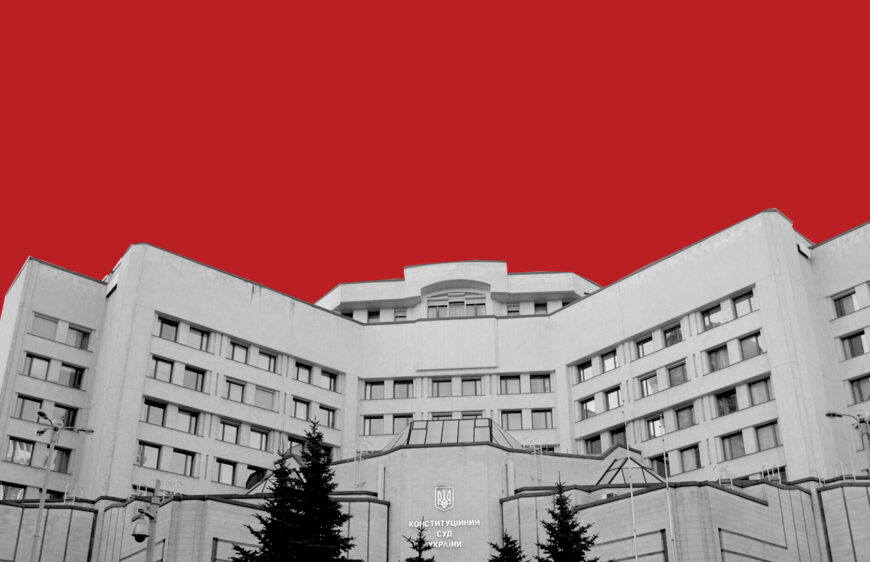
This Friday, the MPs plan to consider the draft law № 4533 on the constitutional procedure, which is supposed to resolve the crisis around the Constitutional Court, which began more than a year ago. Despite the position of the Venice Commission, the G7 Ambassadors, public experts and the statements of the “Servant of the People” MPs, the draft law does not foresee the crucial issue – the competitive procedure for the selection of judges of the Constitutional Court. Instead of minimizing the political influence on the appointment of Constitutional Court judges, the MPs plan to maintain the status quo. One of the arguments against the new competitive procedure is that the model proposed in the amendments is “imperfect”.
The working group within the Parliamentary Legal Committee has developed an updated model for the competitive selection of judges of the Constitutional Court, on which there is a consensus in the Committee. The working group within the Legal Policy Committee has developed an updated model for the competitive selection of judges of the Constitutional Court, on which there is a consensus in the committee. So now the argument about the lack of a competition model is irrelevant. All that MPs need to do is include this model in the draft law № 4533. Adoption of the draft law without a new competitive procedure will not solve the crisis in any way, and “new Tupytskys” – politically dependent judges of low integrity – will be appointed to the Constitutional Court in the future. Moreover, before the second reading, the Committee approved an amendment foreseeing that the MPs can run for the Constitutional Court without even withdrawing. This further politicizes the process of selecting judges for the Constitutional Court.
In this context, the news about Zelensky’s possible appointment of new judges of the Constitutional Court to non-existent vacancies seems particularly alarming. No matter how we treat Tupitsky and Kasminin, their terms will expire only in May and September 2022, respectively. Appointing someone to their posts means deepening the already huge crisis around the Constitutional Court.
The problem can be solved by the adoption of the draft law № 4533 with a new competitive procedure and the appointment of all new judges of the Constitutional Court only in accordance with it.
On September 9, NGOs called on MPs not to support the draft law №4533 on the constitutional procedure without introducing a competitive selection of the Constitutional Court judges with the participation of international experts.
This was preceded by a meeting of the Parliamentary Legal Committee headed by Andriy Kostin, the MP of the “Servant of the People” faction, where the MPs refused to support all amendments concerning the competitive selection of judges of the Constitutional Court.
Thus, the Committee decided to exclude the previously approved amendments to the competitive procedure for the selection of candidates for the position of the Constitutional Court judge, leaving it as it is today.
However, on November 11, the President’s representative in the Constitutional Court, Fedir Venislavsky, supported the introduction of a single competitive procedure for the selection of judges from all appointing bodies – the President, the Parliament and the Congress of Judges – and expressed hope that the initiative would be supported by the MPs.


