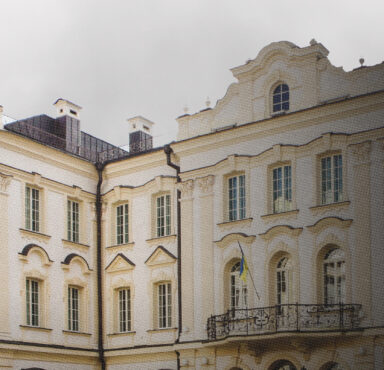
Battle at the Appeal: Will the Sixth Administrative Court of Appeal allow Lvov with a Russian passport to reclaim the position of the Supreme Court judge?

This Thursday, March 28th, the Sixth Administrative Court of Appeal will deliberate on the appeal of the Supreme Court regarding the decision reinstating Lvov as a Supreme Court judge. The presiding judge in this case is Andriy Kuchma.
The legal battle over Lvov’s case continues for the second year. Following the publication of evidence indicating that he holds Russian citizenship, he was removed from the Supreme Court. However, in January this year, the Kyiv District Administrative Court reinstated him as a judge. At that time, judge Kushnova emphasised that the evidence found by the Security Service of Ukraine and journalists was insufficient, and an original of the passport or official confirmation from the Russian Federation was necessary. An analysis of this decision can be found here.
In fact, the law does not explicitly outline the procedure for confirming citizenship, as Kushnova requires. The need to regulate this issue and define what evidence will suffice to confirm foreign citizenship is discussed here.
Next up is the final battle. The Lvov case will serve as a litmus test for the Sixth Administrative Court of Appeal, and Judge Kuchma has the chance to show whose side he’s on — whether with Ukraine, in the name of which the decision will be pronounced, or with the enemy seeking to destroy Ukraine. The reinstatement of Lvov will open the door for Russians to administer justice. This cannot be allowed.
DEJURE Foundation will closely monitor this proceeding and urge you to do so. This is more than just a matter of judicial reform. It’s a matter of our survival.