Second Panel of the HQCJ to conduct qualification assessments for four judges without Public Integrity Council involvement
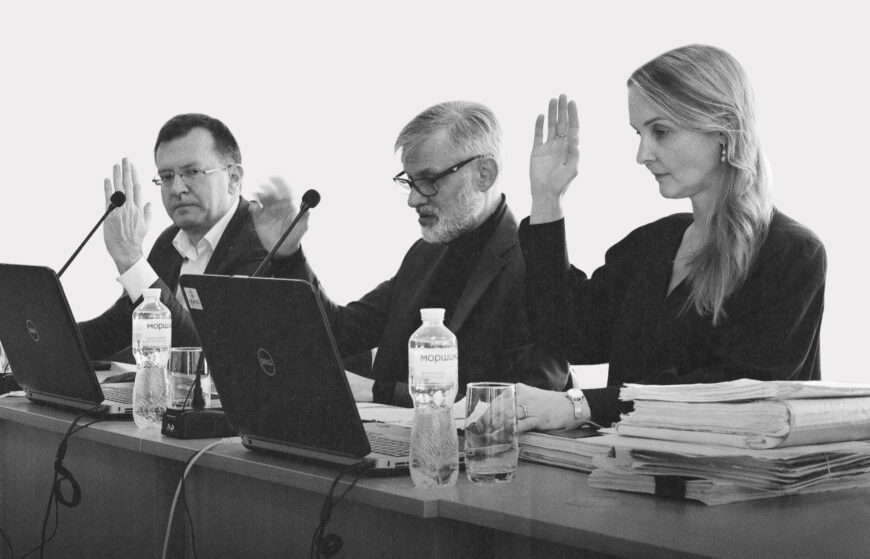
Tomorrow, November 26, the Second Panel of the High Qualification Commission of Judges (composed of Volkova, Sydorovych, and Kydysiuk) plans to conduct qualification assessments for four more judges without the involvement of the Public Integrity Council (PIC). Last week, the same panel deemed judges Shkarlat and Chubai fit for their positions despite the absence of opinions of the PIC regarding their integrity.
This action by the Second Panel violates prior agreements with the PIC, which stipulated that hearings would only be scheduled for judges whose dossiers had been fully reviewed by both bodies. However, the PIC’s inability to copy data from judges’ dossiers — being restricted to viewing them without the option to copy information — has made thorough analysis impossible.
Tomorrow’s schedule includes interviews with judges Oleksandr Haiiev, Ruslana Hukova, Denys Shcherbak, and Petro Burda. Notably, judge Petro Burda of the Petropavlivsk District Court in the Dnipropetrovsk region already has a negative integrity assessment from a prior composition of the PIC. The reasons include false information he provided regarding his professional activities and his omission of his daughter in family ties declarations for 2017–2019. In 2016, his daughter worked as an assistant to another judge, which raised concerns about the concealment of close relatives employed within the judiciary — an act that violates transparency requirements and conflict-of-interest prevention measures.
While it would be hopeful to expect the Second Panel to reconsider and withdraw these judges from assessment, past experience indicates that Volkova, Sydorovych, and Kydysiuk are intent on undermining public participation in the qualification process. This deliberate exclusion sabotages the reform and cleansing of Ukraine’s judiciary.
Such actions by the Second Panel violate Ukraine’s commitments to ensure meaningful public involvement in judicial qualification assessments, a point emphasized by the European Commission in its latest report.