
The MPs of “Sluha narodu” are going to make critical information about court hearings and decisions secret
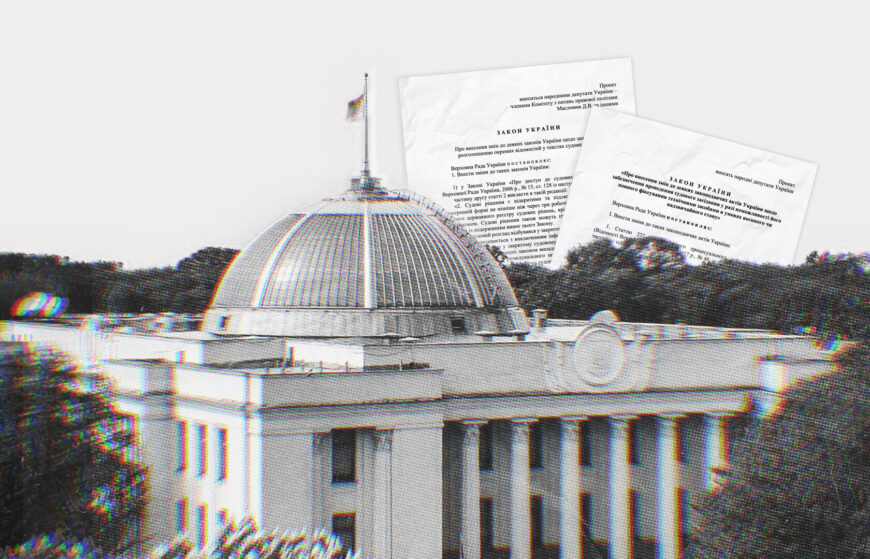
Against the background of yesterday’s good news, the Verkhovna Rada is planning to adopt two harmful draft laws next week: No. 8359, which allows not recording court sessions, and No. 7033-д, which provides for limiting access to the court register.
What is wrong with draft law No. 8359?
It stipulates that during a state of war or emergency, “in the event of an objective impossibility” of fully recording the court proceedings technically, the secretary records only the essential moments of the case in the minutes. This gives endless scope for abuse. What is an objective impossibility? Any judge can interpret and use it in his way.
Let’s recall only one of the hearings in the case regarding part of the “Vovk’s tapes” when the light went out on just one floor. Or Judge Zaichko, who, on tapes published by Slidstvo.info, spoke about how to destroy the recording of the proceeding in order to change the text of the decision. If the provisions proposed by draft law No. 8359 were to apply in both of these cases, the judges would easily get away with it by stating that “it is objectively impossible to make a recording” and would change the text of the decision or simply not record controversial points.
What is wrong with draft law No. 7033-д?
First, it is proposed that during martial law, judges should be given the right to determine at their own discretion what information in the decision may not be published for security reasons if the case is considered in open court. This opens the way to abuse.
Secondly, the state can significantly limit the ability of Ukrainians to receive information that is of significant public interest freely. In particular, decisions in cases involving crimes against the foundations of national security, the protection of state secrets, the inviolability of state borders, conscription and mobilisation, as well as the procedure for military service are proposed to be completely hidden from the public for the duration of martial law and a year after its end (although such decisions will still be made in open court).
After all, the draft law proposes not to specify information about, for example, critical infrastructure objects in court decisions. The problem is that the list of such objects is incomplete and always changing, and information about the rest of the critical infrastructure objects is already available in open sources.


