The working group checked the information about Roman Ihnatov’s possible Russian citizenship: what did the HQCJ decide?
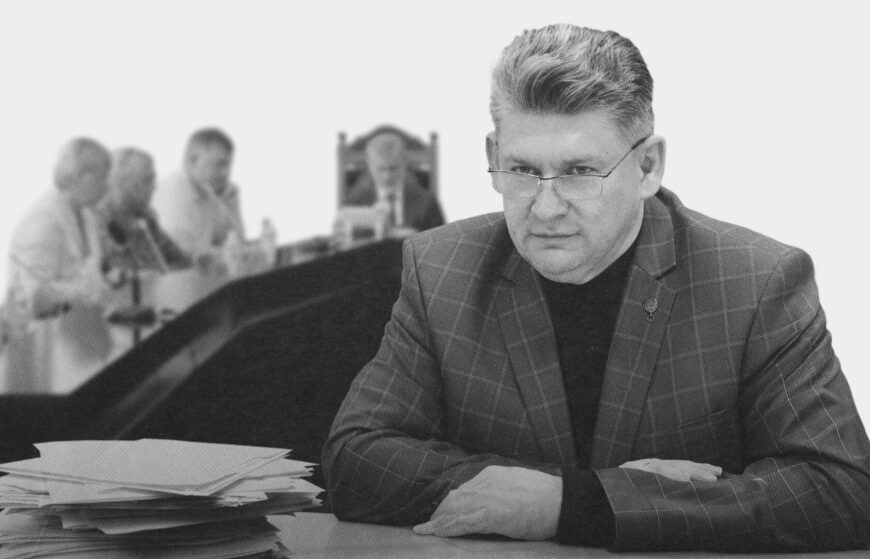
On February 8th, the High Qualification Commission of Judges (HQCJ) convened to review the findings of a special working group tasked with investigating the potential Russian citizenship of Roman Ihnatov, the head of the HQCJ. This group comprised three members from the Commission itself and three representatives from NGOs. They diligently gathered and analysed all publicly available information along with responses from relevant authorities. The report highlighted the following key points:
- Ukrainian registers do not contain any records of Ihnatov’s Russian passport.
- The serial number of Ihnatov’s supposedly new passport of the Russian Federation, provided by the Foreign Intelligence Service, partially matches an old USSR passport number, prompting doubts regarding its authenticity.
- Roman Ihnatov indeed worked as a prosecutor in the Russian Federation in the mid-90s. According to local law, he would have to be a citizen and take an oath. However, the procedure for taking the prosecutor’s oath in the Russian Federation was approved in 1999, already after Ihnatov moved to Ukraine. The working group could not confirm the existence of any other regulatory document governing this oath-taking process.
- Citizenship, typically confirmed by a passport, might not have been mandatory to become a prosecutor in the Russian Federation during that period. For instance, Ihnatov commenced his work as a prosecutor in Ukraine before obtaining a Ukrainian passport, suggesting he may have been employed using a Soviet document.
- The State Judicial Administration (SJA) reported that it could not provide a copy of the personal file of the judge since it remained in the city of Krasnyi Luch, which is currently occupied.
- It is also impossible to verify the documents regarding Ihnatov’s appointment to the position – due to the organisation of document circulation in the 90s and early 2000s, documents about some judges are missing. The SJA indicated that Ihnatov’s appointment documents were among those destroyed, precluding the receipt of a letter from the Russian State Migration Service confirming the absence of Russian citizenship, which Ihnatov claims he provided to acquire Ukrainian citizenship and his judicial position.
Consequently, the HQCJ announced the completion of the working group’s task, with the full report set to be soon published on its website. It appears that the HQCJ finds no grounds to appeal to the HCJ regarding the dismissal of Ihnatov.
At the end of last year, the Foreign Intelligence Service of Ukraine sent a letter to the HQCJ, which highlighted the coincidence of his personal data with information from leaked Russian databases.