17 against 15. Does the High Qualification Commission of Judges agree with the negative opinions of the Public Integrity Council?
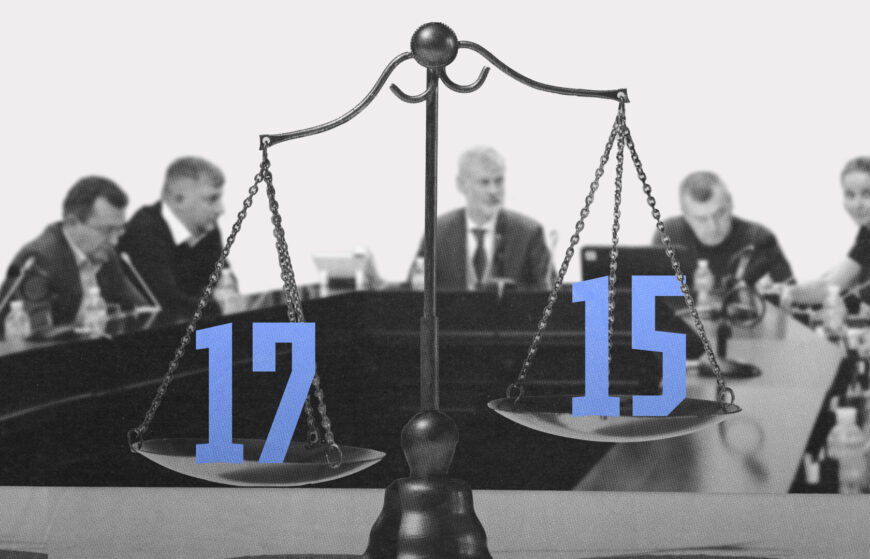
After nearly three months of qualification assessment, here are the outcomes: The High Qualification Commission of Judges (HQCJ) has completed its assessment of 36 judges who received negative opinion from the Public Integrity Council (PIC). Of these, the HQCJ has overturned the negative opinions in 17 instances, allowing these judges to maintain their positions. However, in 15 cases, the HQCJ has recommended the judges for dismissal.
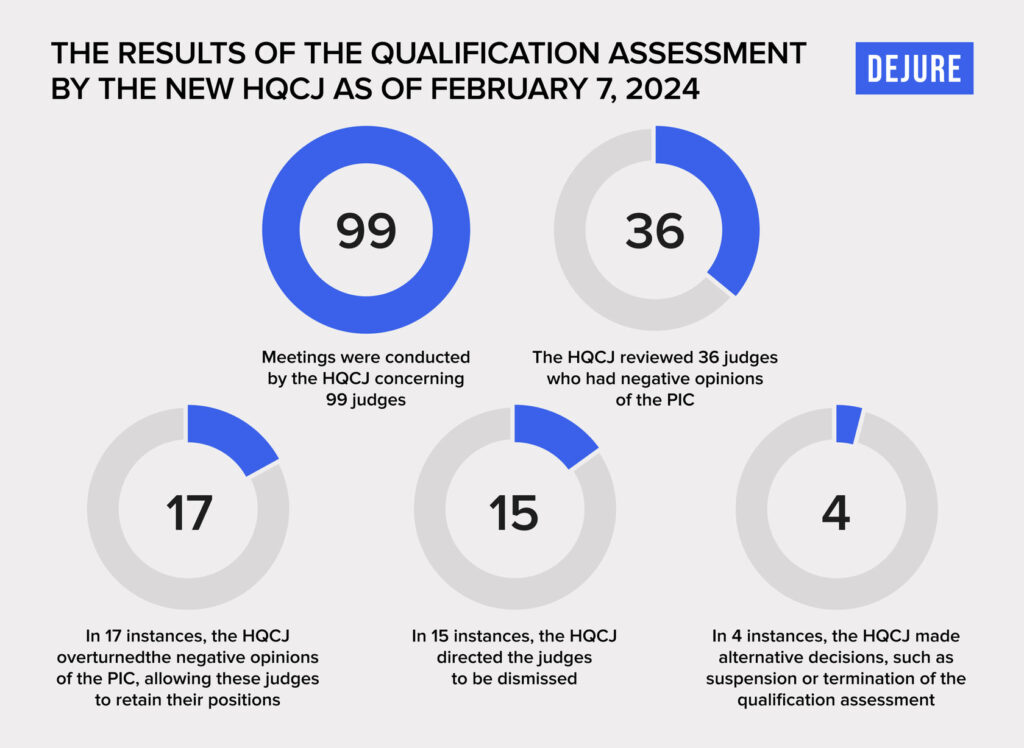
The results are mixed. DEJURE Foundation maintains represents a significant advancement compared to the previous HQCJ. The previous commission disregarded the stance of the PIC, conducted superficial assessments, and inquired about judges’ leisure activities during interviews. However, despite this progress, there are more instances of overturned opinions than recommendations for dismissal. This suggests that, despite the criteria set jointly with the PIC, there are differing interpretations between the HQCJ and public sector representatives regarding what constitutes low integrity behaviour of a judge.
Specifically, the HQCJ overlooks instances where judges exonerate drunken drivers. For example, it retained judge Honcharova in her position despite the fact that half of the cases she considered under Article 130 of the Code of Administrative Offences of Ukraine were closed due to the statute of limitations expiration. This is an old scheme.
Another example is the assessment of judge Pedenko’s conduct, who intentionally delayed proceedings in 21 cases involving drunk drivers. In two instances, the judge even released the drivers citing insignificance, despite the law explicitly prohibiting such actions. Remarkably, in one case, the offense itself occurred after the prohibition was enacted. Hence, her decision was blatantly illegal.
Earlier, we also highlighted additional issues in the operations of the HQCJ, notably their lack of transparency regarding their motives. To date, none of the decisions regarding the unsuitability of judges for their positions have been made public.
Finally, it’s worth noting that during the qualification assessment process, there are issues arising from the judges themselves, not solely from the HQCJ. There’s a prevalent trend where judges conveniently claim “illness” and fail to attend hearings.
We will continue monitoring the advancement of judiciary cleansing and will release further statistics accordingly.