A decision that could bring Vovk back: the Grand Chamber will consider the Burkhan case
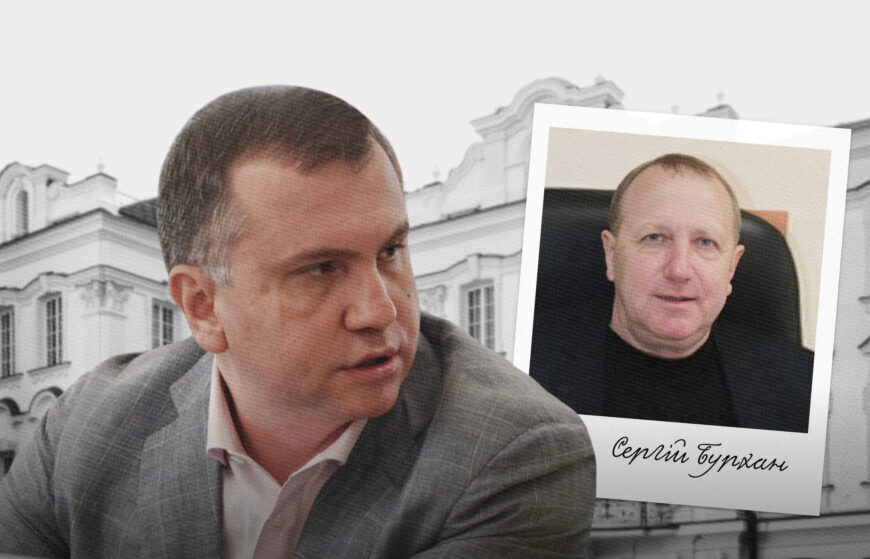
On 20 November, the Grand Chamber of the Supreme Court may adopt a decision that opens the door for former judge Pavlo Vovk to return to the system and undo the efforts to cleanse the judiciary. This will happen if the Grand Chamber overturns the decision of the High Council of Justice regarding Serhii Burkhan of the Verkhnodniprovsk District Court in Dnipropetrovsk oblast.
The High Council of Justice dismissed Burkhan from his judicial position for committing a disciplinary offence. The former judge is accused of bribery: covert investigative actions document how he discussed “issues” informally with an intermediary and negotiated the lifting of an asset seizure. According to the verdict of the High Anti-Corruption Court, the intermediary confirmed that he communicated with the judge to secure judicial decisions in exchange for unlawful benefits.
Why is this case directly related to Pavlo Vovk?
At the heart of the dispute is a fundamental question: can the High Council of Justice use criminal case materials in disciplinary proceedings, including covert investigative actions (audio recordings, video surveillance)? The Grand Chamber has repeatedly affirmed that it can. But now there is an effort to break this position, specifically in the interests of Pavlo Vovk, the former head of DACK, who was dismissed on the basis of NABU’s leaked tapes.
If, in the Burkhan case, the Grand Chamber suddenly decides that the HCJ had no right to use pre-trial investigation materials, this will establish a new practice that will be used to bring Vovk back into the system. And the fact that such a reversal is happening right before the consideration of Vovk’s own case on 27 November will likely be presented as a “coincidence.”
The consequences could be devastating
Overturning the HCJ’s decision regarding Burkhan will become a signal for reinstating not only Vovk, but also other figures featured in the “Vovk’s tapes” and judges dismissed on the basis of criminal investigation materials. This would mean the return of dozens of low-integrity judges suspected of criminal offences and the de facto halt of judicial cleansing.
It will also serve as further evidence that, despite the liquidation of DACK, the judicial mafia still influences key institutions, including the Supreme Court itself. After such a decision, the question will arise as to whether Ukraine can move toward a fair judiciary and European integration if the associates of Vovk — the head of the very court that could have reinstated Yanukovych as President — return to the system.
The issue of using criminal case materials in disciplinary proceedings was examined by DEJURE experts in the analytical report “Crossroads of criminal and disciplinary processes.”