Elections in the Shadow of War: Who are mobilised attorneys hindering?
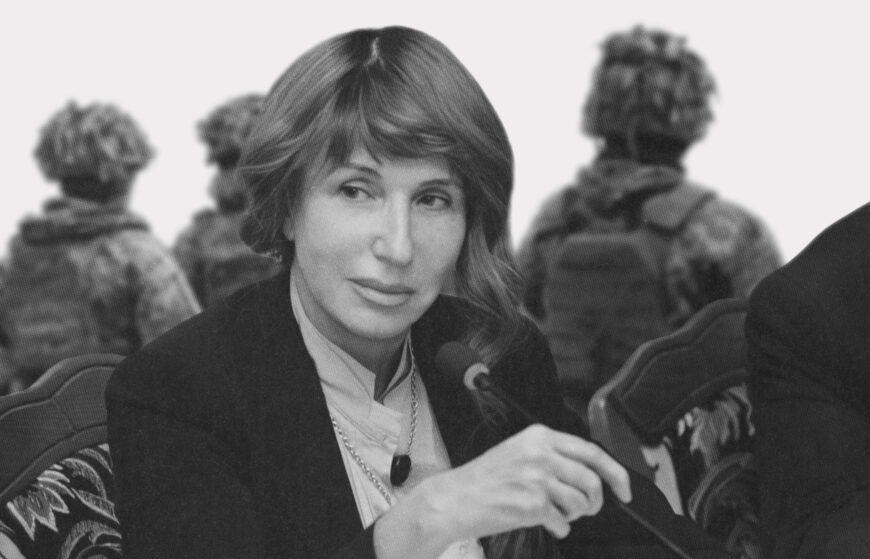
Yaroslav Kuzyshyn, Advocacy Manager, DEJURE Foundation
Kateryna Shevchuk, Communications Manager, DEJURE Foundation
This article was originally published in Ukrainian in Ukrainska Pravda.
The Ukrainian Bar is increasingly engulfed in a storm of manipulations and conflicts. Connections with Russia and the traitor Medvedchuk, corruption, monopoly of the Ukrainian National Bar Association (UNBA), and impunity of traitor attorneys have become regular indicators of the state of affairs in the governing bodies of the Ukrainian Bar. The root cause of most of Bar’s problems is the concentration of power within one group. Currently, the legitimacy of the Bar’s leadership is in question, as its term ended in November 2022. At that time, elections were cancelled allegedly due to the impossibility of holding them under martial law. According to information from DEJURE Foundation, new elections are still being prepared, but there is one caveat.
The head of the Bar Council of Ukraine (BCU) and the UNBA, Lidiya Izovitova, intends to choose a convenient and loyal successor, much like she once succeeded Viktor Medvedchuk. Izovitova and some members of the BCU cannot participate in these elections, as the law prohibits being the head and member of this body for more than two consecutive terms. Therefore, the Bar Council and the UNBA may get a new head, a close associate and deputy of Lidiya Izovitova — Valentyn Hvozdiy, in the coming months. Of course, for them to have a successful campaign, these elections must be as closed and non-transparent to the public as possible, and “inconvenient” candidates must be ruled out and deprived of their right to vote. It is clear that independent attorneys will be the ones to expose potential abuses and violations of the law to the public during this process. Moreover, some openly criticise the UNBA and highlight the flaws of the system.
How do they plan to eliminate “inconvenient” candidates?
According to our information, the leadership of the Bar, through “their people” in the General Staff, without the agreement of its legal department, submitted an order for the Commander-in-Chief to sign, obliging Ukrainian attorneys who are military servicemen to suspend their licenses. This order is classified as secret, which is unusual for documents of this nature. The fact that the order includes guidelines on holding an attorney accountable for disciplinary action indicates the likely involvement of the Bar’s heads. Moreover, the BCU and UNBA have already announced that they will take measures against those who obstruct the implementation of this order, “inspired” by them. If an attorney does not suspend their license, the military unit is to initiate disciplinary action against them. Notably, with a license, attorneys can participate in the elections of self-governing legal bodies, represent people in court, and practice law.
Military serviceman and attorney of the families of the Heavenly Hundred heroes, Vitaliy Tytych, explains how the inspired by the Bar Association order will impede his activities:
“On February 25, 2022, I voluntarily joined the Armed Forces of Ukraine, where my duties are to some extent related to documenting war crimes. At the same time, our law firm continues to provide pro bono legal services to clients in cases of special public interest, particularly to the victims in the ‘Maidan cases’. Additionally, our law firm provides legal assistance to museum institutions affected by the aggressor state’s actions. The law firm founded the Raphael Lemkin Society, which unites Ukrainian cultural institutions and collects evidence of genocide in the cultural sphere to present in international courts. For this work, having the status of an attorney is critical.”
Darya Svyrydova, expert of the Ukraine 5 AM Coalition and partner at AZONES Law Firm, comments:
“If we talk about the incompatibility of the attorney practice and military service, the question arises: in what specific cases do we see the public threat of such compatibility, especially in the context of a full-scale invasion?”
Izovitova and Hvozdiy consider military service and legal practice incompatible. In other words, those activities cannot be combined due to a conflict of interest. But whose interests does this harm? Is that the interest of the military commander, with whose consent the mobilised attorney conducts such activities, or the client whose interests they defend in court? In fact, this conflicts with the ambitions of the Izovitova-Hvozdiy group to exclude independent lawyers, such as Vitaliy Tytych, from the professional community and further usurp the power through “elections” without choice.
Interestingly, the UNBA conceals information about the number of attorneys mobilised for military service, but we can confidently say that there are hundreds, if not thousands, of such attorneys. Among them are Ihor Chernyak, Illia Kostin, Andrii Pysarenko, Yevhenia Zakrevska, Oleksiy Horin, Oleksiy Zelentsov, Vitaliy Tytych, Artem Donets, Vasyl Bilous, Andrii Polikanov, and others.
By the way, this is not the first attempt by the Bar leaders to get rid of mobilised attorneys. In May 2023, they tried to push through the Territorial Defense Command the idea that combining military service and the status of an attorney constitutes a corruption offence. However, that attempt was unsuccessful due to the reaction and efforts of the mobilised attorneys.
In what cases is it possible to combine military service and legal practice?
Darya Svyrydova explains:
“The application of the rule on the incompatibility of military service and legal practice, which was enshrined in the law on the Bar before the start of the full-scale war in Ukraine, particularly during mobilisation, is questionable in light of how well the legislation on the Bar meets the requirements of the martial law. Pretending that this sphere exists in a vacuum and that the professional community of attorneys is not affected by the consequences of the armed conflict would be very strange.”
“The law was written for peacetime. It does not take into account that attorneys joined the armed forces to repel the aggressor, not because they dreamed of getting another paid job,” notes Vitaliy Tytych.
It seems that the BCU and UNBA are well aware of this. Therefore, at the beginning of the full-scale invasion, they adopted decision No. 24, recognising that the incompatibility provision does not apply during martial law. However, after a while, the position of the Bar leadership suddenly changed in the opposite direction. On June 10, the Bar Council repealed decision No. 24, justifying this by claiming that attorneys who took up arms and did not suspend their licenses had found a “loophole for additional income.” It appears that, in the opinion of the BCU, those attorneys who defend our land, risking their lives, did so for selfish purposes.
It is another matter if a mobilised attorney later signed a contract or became a military official, which grants them organisational or administrative responsibilities. In these cases, they have effectively entered professional military service and, therefore, must suspend their legal license. Vitaliy Tytych explains:
“All partners from our law firm were also mobilised. They passed certification, received officer ranks, and assumed positions as military officials, leading them to suspend their legal practice. Meanwhile, I consciously avoided taking an official position incompatible with the practice of law to maintain my right to be an active attorney.”
What about the traitor attorneys?
They, instead, are calm. The BCU and UNBA are in no hurry to initiate the revocation of the licenses of hundreds of traitor attorneys, including the leaders of the occupation Crimean Bar Association, Olena Kanchy and Anatoliy Zhernovyi. As a result, unlike mobilised attorneys, they will be able to participate in the upcoming elections to the Bar bodies.
The actions of Izovitova and her team effectively promote Russia’s interests, undermining the strength of the Ukrainian Armed Forces. The Bar bodies, which are supposed to protect the interests of attorneys, create a situation where attorneys must defend themselves from these bodies, proving that their simultaneous military service and legal practice is not a disciplinary offence.
This situation again highlights the critical need for reform of the Bar, particularly its governing bodies. Firstly, the order of the Commander-in-Chief requiring mobilised attorneys to suspend their licenses must be repealed. The Law on the Bar of 2012, which is not adapted to the specifics of wartime, needs amendments to recognise that military service as a result of mobilisation is compatible with the practice of law, provided that an attorney has not signed a military contract and is not a military official. One cannot disregard the context: such individuals are not professional militaries but have taken up arms during the war to defend their land. At the same time, one cannot allow the intention of Izovitova and Hvozdiy’s group to deprive mobilised attorneys of their right to vote.