Parliament prepares to terminate the scandalous Temporary Investigative Commission following civil society appeal
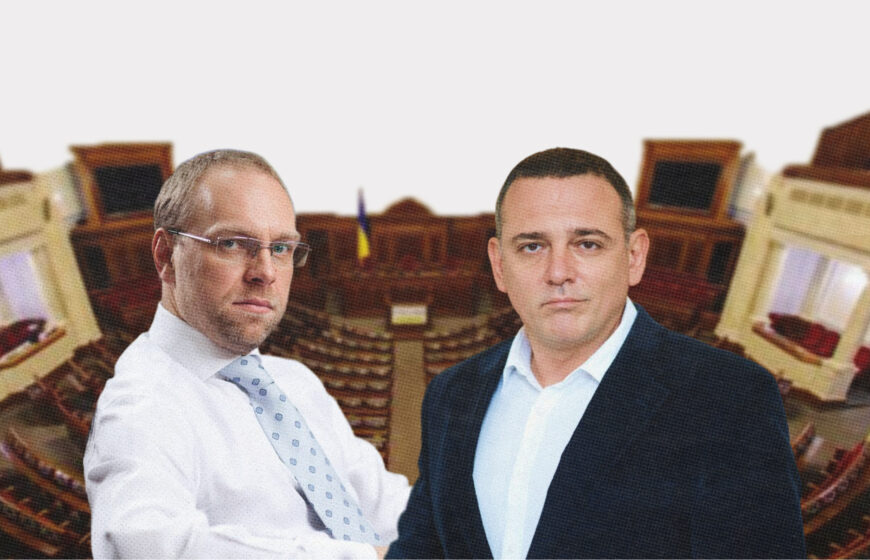
A group of Members of Parliament has initiated the dissolution of the Temporary Investigative Commission (TIC), which, instead of combating corruption, exerted pressure on anti-corruption bodies and on institutions responsible for the selection and integrity of judges. This move followed a public appeal from civil society demanding that the commission’s activities be brought to an end.
Why the TIC’s activities drew criticism
The TIC was established in June 2025, ostensibly to investigate possible corruption offences in the judiciary and law-enforcement bodies, but in practice to attack NABU and SAPO. It was headed by MPs Serhii Vlasenko and Maksym Buzhanskyi. Almost immediately, the TIC repeatedly exceeded its mandate during its work, including by:
-
Undertaking to review the activities of the High Council of Justice, the High Qualification Commission of Judges, and the Public Integrity Council, despite the Verkhovna Rada not assigning it such a task.
-
Attempting to compel the appearance of HQCJ member Serhii Chumak, despite an explicit statutory prohibition on such actions with regard to judges.
-
Creating a so-called “expert group” is not foreseen by law and bears no responsibility for its conclusions.
Position of Parliament, anti-corruption institutions, and judicial governance bodies
All key anti-corruption bodies and judicial governance institutions publicly stated that the TIC had effectively turned into an instrument of pressure, including the National Anti-Corruption Bureau of Ukraine, the Specialised Anti-Corruption Prosecutor’s Office, the High Anti-Corruption Court, the High Council of Justice, the High Qualification Commission of Judges, and the Public Integrity Council.
Concerns were also voiced by international partners. In its 2025 report on Ukraine, the European Commission emphasised that the TIC’s activities must not undermine trust in anti-corruption institutions or go beyond the principle of separation of powers.
Problems with the TIC’s work were also identified by the Verkhovna Rada’s Rules Committee. Its conclusion noted that the TIC submitted its report in violation of the law: without indicating the date of the next report, without the results of a vote on the conclusions, and without proposals. Despite the fact that Parliament did not consider the report, the TIC approved a work plan and announced new hearings.
These facts became the basis for a civil society appeal to the Verkhovna Rada, demanding that the TIC’s report be immediately heard in the plenary chamber and that its mandate be terminated. Following the appeal, Parliament began preparing a decision on considering this issue and the possible termination of the commission’s work.
The vote on the future of the TIC will be an indicator of whether Parliament is prepared to halt political pressure on anti-corruption bodies and judicial governance institutions. After all, the TIC is a group of MPs that has gone beyond the tasks defined by Parliament and is obstructing Ukraine’s fulfilment of its obligations to the European Union.