Rushing while it’s hot: the Bar Council is racing to nominate to the Selection Commission of the High Qualification Commission
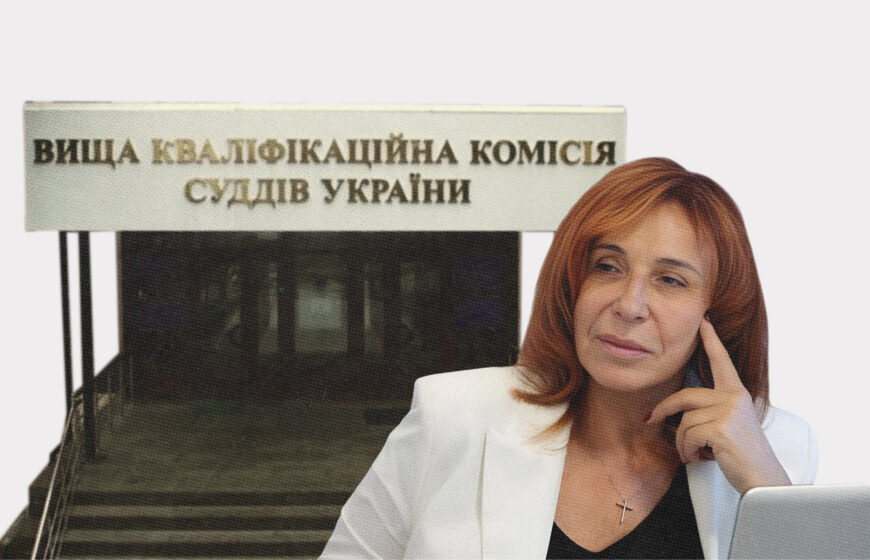
The past is returning, rushing to take the place of international experts in the Selection Commission. A long-time ally of Medvedchuk, Lidiia Izovitova, is eager to swiftly appoint her delegate.
On June 1, the mandate of the international experts responsible for selecting candidates to the High Qualification Commission of Judges (HQCJ) expired. This body plays a crucial role in ensuring the quality of judges appointed across the country. The exit of international experts raises the risk of a return to the court manipulation schemes of the Yanukovych era — a danger civil society had warned about and which is now materialising.
While more than 80 civil society organizations have signed a call to the Ukrainian authorities to preserve and extend the participation of international experts in selection commissions, the Head of the Bar Council of Ukraine, Lidiia Izovitova, addressed the Head of the High Council of Justice (HCJ) with a complaint about missed deadlines in forming a new composition of the Selection Commission for appointing HQCJ members.
It is striking that representatives of an unreformed institution plagued by its own problems have the audacity to accuse others of inaction and delays. So let’s look at just a few examples of the Bar Council of Ukraine’s (BCU) own inaction under Izovitova’s leadership:
-
The term of the BCU chair and its members expired back in November 2022. At that time, the BCU cancelled the attorneys’ congress until the end of martial law, citing wartime constraints.
-
Due to the BCU’s failure to convene a congress, two seats in the HCJ remain vacant under the bar quota for over three years. This significantly affects the HCJ’s ability to function, especially given its quorum issues and backlog of thousands of complaints.
Meanwhile, judges’ congresses and prosecutors’ conferences (similar in nature) continue to be held under the same conditions. That is, the BCU unlawfully extended its powers, citing institutional continuity — a principle that only applies where explicitly provided for by law. The Law on the Bar includes no such provision.
Izovitova accuses the HCJ of undemocratic behaviour, while she herself has unlawfully held onto power as chair for 13 years, with no apparent intention to step down.
The legitimacy of any decisions made by the BCU after the expiration of its mandate is highly questionable. This raises the question: can the current composition of the Council legally participate in forming the HQCJ Selection Commission at all? In other words, their very right to nominate candidates is in doubt.
We’re seeing the process unfold: old corrupt elites are hurrying to fill the vacant seats with their puppets, in order to appoint judges who will serve the system for life. Whose voice will be heard more clearly in the Verkhovna Rada and the President’s Office — that of civil society, or that of Portnov’s and Medvedchuk’s allies?