Supreme Court Limits the HCJ’s Powers in Disciplinary Proceedings
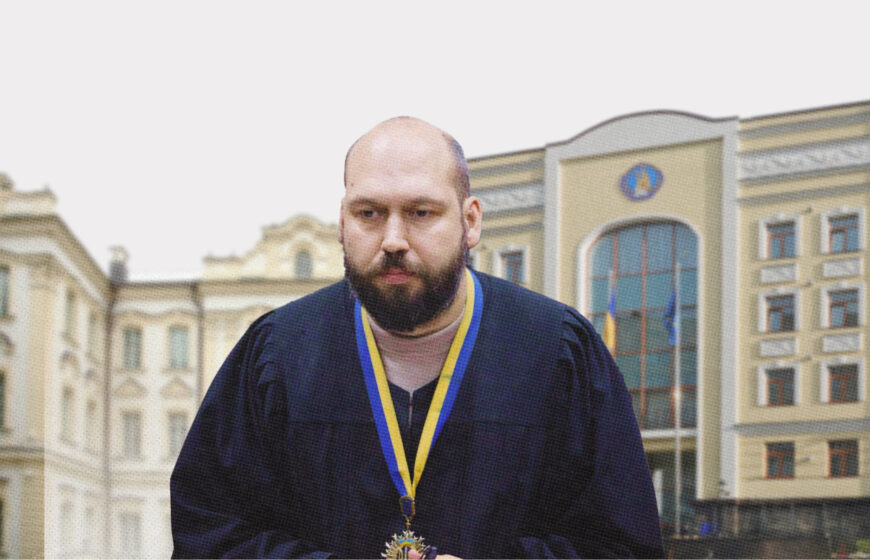
The Supreme Court continues to hinder judicial reform. In January 2025, the Grand Chamber of the Supreme Court overturned a decision by the High Council of Justice (HCJ) that held Serhii Vovk, the notorious judge of the Pechersk District Court, disciplinarily liable. This ruling undermines the legitimacy of handling complaints after the complainant has withdrawn and diminishes the importance of examining cases on the merits.
Back in June 2024, the HCJ issued a disciplinary warning to Judge Serhii Vovk for authorising investigators to search and seize vehicles without sufficient legal grounds. The seized property had no relation to the criminal case, yet the vehicles were confiscated and held for more than ten months. The HCJ found that the judge had violated the right to property and the right to a fair trial.
During the HCJ’s review, the complainant withdrew the complaint, citing their own analysis of judicial practice and concluding that such court orders were possible. However, the Disciplinary Chamber continued to consider the case, as such a withdrawal is not a valid reason to terminate proceedings.
Judge Vovk appealed the HCJ’s decision to the Grand Chamber of the Supreme Court, which overturned it in January 2025. The court justified its ruling by claiming that the HCJ:
-
Failed to explain how fundamental rights and freedoms were violated by the judge;
-
Allegedly overstepped its authority by assessing the legality of a judicial act outside of the procedural framework;
-
Continued reviewing a case after the complainant withdrew the complaint, which the court interpreted as the HCJ acting on its own initiative, contrary to its role.
The Grand Chamber even cited an opinion from the Consultative Council of European Judges, despite the fact that such an opinion did not exist at the time the case was being considered.
Crucially, the HCJ is entitled to proceed with disciplinary cases even if a complaint is withdrawn. This rule exists to prevent collusion between judges and complainants or intimidation of those who file complaints. Furthermore, the Disciplinary Chamber can even initiate proceedings on its own upon discovering evidence of judicial misconduct.
Examples include:
-
Ihor Ratushniak, judge of the Tyvriv District Court (Vinnytsia Region), who failed to recuse himself from a case;
-
Svitlana Kolehaieva, former judge of the Desnianskyi District Court (Kyiv), who appeared intoxicated on military premises;
-
Nataliia Tserkovna, judge of the Commercial Court of Rivne Region, who granted interim relief without reviewing the evidence.
In summary, the Grand Chamber continues to interfere with the HCJ’s discretionary powers, overturning its decisions on the merits, re-evaluating evidence in disciplinary cases, and invoking non-existent violations to justify its rulings. This seriously undermines the independence and effectiveness of judicial accountability in Ukraine.