The apartment of Knyazev in Pechersk for a thousand hryvnias: what will the appeal decide?
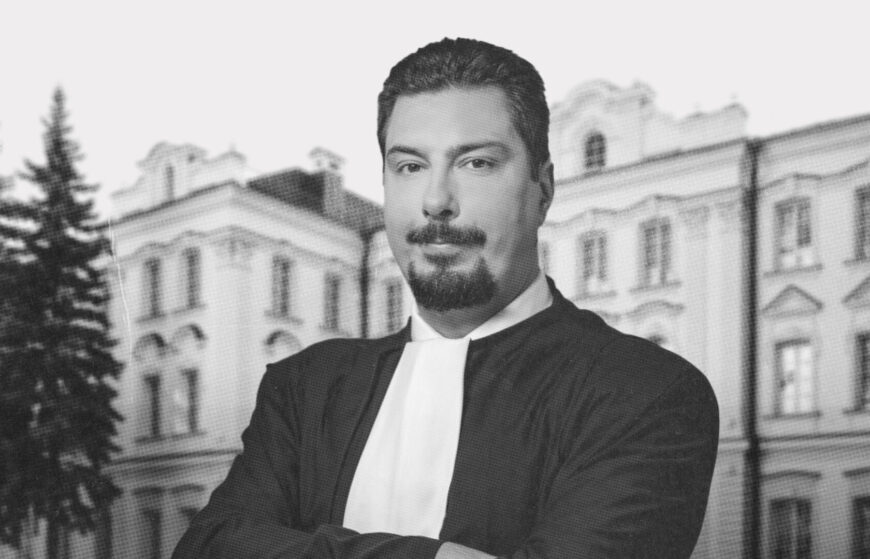
A 133-square-meter apartment in Pechersk for one thousand hryvnias per month – does it sound plausible? The Pechersk District Court of Kyiv decided that it appears unlikely, and if that was the case, then it would constitute a gift that Vsevolod Knyazev, as a judge, was not entitled to accept. However, Knyazev contested this decision, and on Monday, February 19, the Kyiv Court of Appeal will deliberate on this matter (No. 757/50993/23-p).
At the end of last year, the Pechersk District Court of Kyiv rendered an exceptionally progressive judgment, acknowledging that a 4-room apartment in Pechersk, for which Vsevolod Knyazev allegedly paid 1000 hryvnias monthly, is a gift. The Law “On Prevention of Corruption” prohibits judges from accepting gifts of such magnitude.
In his defence, Knyazev claimed that he allegedly paid this amount for a parking space and $1100 for the apartment itself, supported by corresponding contracts, while the “figures mentioned by the National Agency on Corruption Prevention (NACP) in the protocol are taken ‘out of thin air'”. Regarding why his declarations show a sum of 1000 hryvnias and not 1100 dollars, the former head of the Supreme Court responded that this sum does not require declaration. Ultimately, the court rejected such “explanations” and found Knyazev guilty.
Nevertheless, Knyazev disagreed with the court’s decision and appealed, with the case set to be heard on Monday, February 19, by Judge Matviyenko at the Kyiv Court of Appeal.
This practice of undervaluing the rental price of housing is prevalent among judges, and regrettably, it is frequently overlooked. For example, the High Qualification Commission of Judges (HQCJ) deemed judges Shynkarenko and Bielkina to be of good integrity despite their similar property “stories”. Therefore, the decision and legal position of the Pechersk District Court in this case are extremely illustrative and necessary.
DEJURE Foundation closely monitors this case and anticipates that the appeal will affirm the decision of the first instance, sending a strong signal to all officials engaging in such practices.