The High Council of Justice recognized the actions of bar self-governance bodies as interference in the activities of its member and as discrediting the Council’s decisions
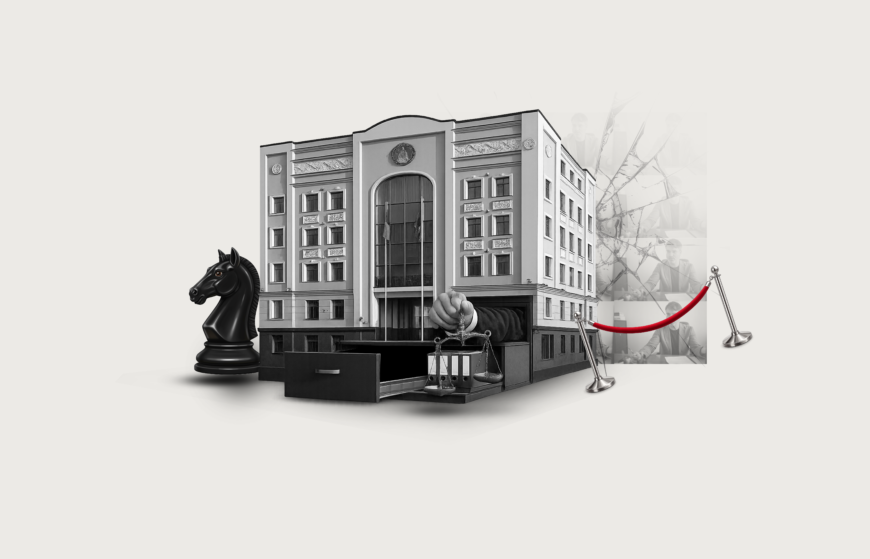
The High Council of Justice (HCJ) unanimously recognised that the actions of the Bar self-governance bodies in holding HCJ member Roman Maselko disciplinarily liable constituted interference in his activities. The HCJ once again emphasised that such actions discredit its work as an independent constitutional body and undermine the authority of the judiciary as a whole.
Case background
Roman Maselko, acting within his powers as an HCJ member, assessed whether Oleksandr Vikhrov, a candidate for judicial office, met the integrity criterion. As a result of this assessment, Maselko identified circumstances indicating the candidate’s lack of integrity, and the HCJ refused to appoint Vikhrov.
Following this, the Bar Council of Ukraine issued a decision negatively assessing the actions of Maselko and other HCJ members who supported his position. It also initiated disciplinary proceedings against Maselko in his capacity as an attorney, despite the fact that he had suspended his legal practice while serving on the HCJ. Subsequently, the Qualification and Disciplinary Commission of the Bar of Zakarpattia Region found Maselko disciplinarily liable and issued a warning.
Findings of the High Council of Justice
On 26 March 2026, the HCJ adopted a decision to take measures to ensure the independence of Maselko as a member of the High Council of Justice:
“…the assessment of the actions of a member of the High Council of Justice in the exercise of his constitutional powers falls exclusively within the competence of the High Council of Justice itself as a collegial body. The adoption of a disciplinary decision against an HCJ member as an attorney whose practice is suspended creates a threat to the independence of a member of a constitutional body and may be regarded as interference with the exercise of his powers.”
“Interference in the activities of a member of the High Council of Justice is any influence involving unlawful conduct by any persons that creates real threats to his independence, obstacles to the conscientious performance of his duties, with the aim of inducing him to adopt an unlawful or unfounded decision, which is unacceptable.”
“By establishing in its decision an alleged violation by a member of the High Council of Justice of the Rules of Legal Ethics, the Qualification and Disciplinary Commission of the Bar of Zakarpattia Region in fact undertook an assessment of the actions of an official who exercises his powers not as a lawyer, but as a member of a constitutional judicial governance body.”
The High Council of Justice stressed that the actions of the Bar self-governance bodies may be interpreted as an attempt to establish external control over the activities of this body. It is particularly indicative that this is not the first signal addressed to the Qualification and Disciplinary Commission and the Bar Council of Ukraine. Despite two previous decisions, the bar self-governance bodies did not stop and continued their pressure. This points not to a mistake or misunderstanding, but to the deliberate nature of these actions.
Based on these facts, the Zakarpattia Prosecutor’s Office registered criminal proceedings under Article 351-2 of the Criminal Code — interference with the activities of the High Council of Justice. This is not the first such case. In the summer of 2025, the police also registered criminal proceedings due to the Bar Council of Ukraine deliberately blocking the convening of the Congress of Attorneys, which is supposed to elect two members of the HCJ.
The High Council of Justice decided to inform state authorities, international institutions, including international bar associations, and the Ukrainian National Bar Association of these facts. However, no acknowledgement of the unlawfulness of their decisions should be expected from the latter. Their position in this and similar cases demonstrates a clear pattern — protecting lawyers involved in law enforcement investigations or those with serious integrity concerns, while blocking reform of the legal profession. To this end, they use both disciplinary mechanisms and public campaigns disguised as “expert” reports to convince audiences that there are no real problems within the system.
All of this once again demonstrates that disciplinary mechanisms within the legal profession are used not to uphold high ethical standards, but as a tool of pressure. Holding Maselko liable is not only a threat to the independence of a specific HCJ member. It is an attempt to influence the decisions of a key judicial governance body. Each such action by the Bar Council of Ukraine further underscores the urgency of reform and the systemic crisis within the Ukrainian legal profession. This is not only an internal demand, but also a direct requirement on Ukraine’s path to the EU. The European Commission has emphasised the need for such reform for three consecutive years. Nevertheless, there has been no real progress on the part of the authorities.