The Verkhovna Rada Destroys the Chance to Reform the Supreme Court — Draft Law No. 13165-2 Adopted in First Reading
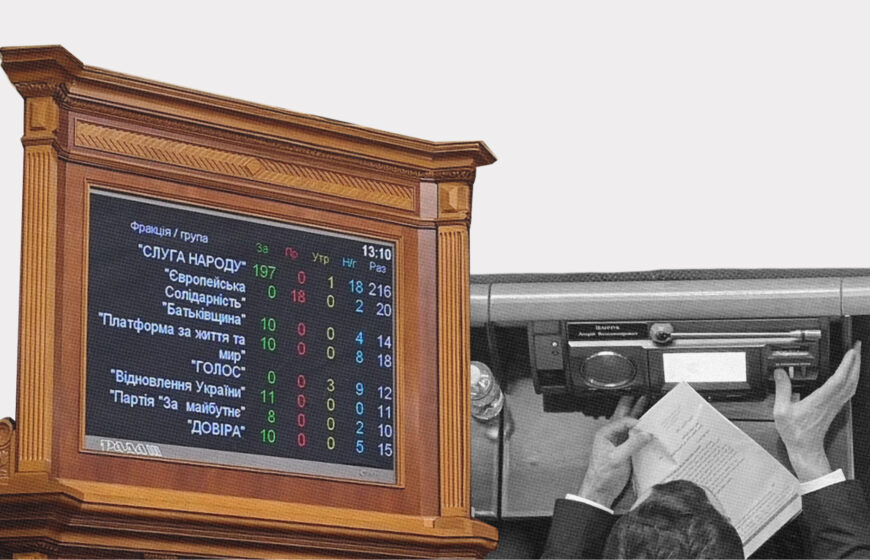
On June 3, 258 Members of Parliament voted in favour of Draft Law No. 13165-2 in the first reading. The draft law amends the procedures for submitting declarations of integrity by judges but fails to include any mechanism for reviewing Supreme Court judges, despite the pressing public and international demand for cleansing this institution.
We had previously warned about the risks of this draft law and explained why its adoption would be a step backwards.
What’s wrong with the draft law?
-
It does not require Supreme Court judges to undergo a one-time mandatory review of their declarations of integrity with the involvement of international experts.
-
It significantly weakens the vetting procedure itself, particularly by limiting the review period to just one year.
-
During the parliamentary debate, some MPs claimed that judges’ lives “should not be turned into constant checks,” and that the adoption of the law allegedly meets the expectations of international partners.
-
The draft law was supported mainly by MPs from the “Servant of the People” party and pro-Russian-oriented factions.
Currently, around 51% of Supreme Court judges have questionable integrity records. Recently, the Supreme Court appointed judge Nadiya Stefaniv to the Grand Chamber despite an investigative report by “Schemes” journalists. Stefaniv has been living for years in an apartment owned by her niece, a Russian citizen who had no official income to purchase it. In her 2024 declaration, the judge claimed she uses the apartment for free. However, the market value and the declared value differ by over UAH 3 million.
A proper integrity review of Supreme Court judges could have prevented such situations, as well as the case of judge Valentyna Simonenko, suspected of holding Russian citizenship, who retired and now receives a monthly pension of approximately UAH 200,000. Another Supreme Court judge, Bohdan Lvov, was dismissed due to his Russian citizenship — yet, these facts were first uncovered by journalists, not by state institutions. Without vetting this Court’s current composition, it is impossible to speak of the Supreme Court’s effectiveness or independence.
A real solution would be to establish a vetting of sitting Supreme Court judges by an independent panel with the meaningful involvement of international experts. This review must cover the full period of each judge’s professional activity, not just the past year.
Whether these critical concerns will be addressed before the second reading remains an open question. We will closely monitor the revision of Draft Law No. 13165-2 and continue to insist on real mechanisms for cleansing the Supreme Court.
There can be no genuine European integration without a decent judiciary. It is time to stop covering up systemic impunity with new procedures — and finally reform the Supreme Court.