Tymoshenko’s complaint in the Supreme Court: evidence at risk
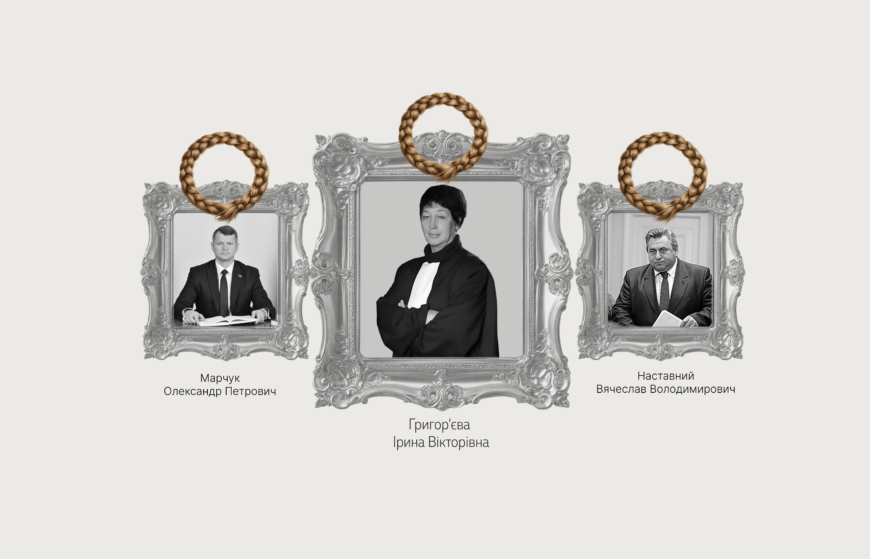
Supreme Court judge Iryna Hryhorieva, in whose possession NABU found $50,000 in marked banknotes, opened proceedings not foreseen by law following a complaint filed by Yuliia Tymoshenko. Hryhorieva, together with two other Supreme Court judges — Oleksandr Marchuk and Viacheslav Nastavnyi — considered Tymoshenko’s complaint regarding the legality of searches conducted in her office. The same controversial head of the Batkivshchyna party. In January, the National Anti-Corruption Bureau of Ukraine (NABU) caught her “red-handed” with money allegedly intended to bribe members of parliament.
In response, Tymoshenko challenged the investigative judge’s authorisation that allowed NABU to conduct a search at the Batkivshchyna office. There are two possible explanations: either the MP does not know Ukrainian law, or she believes the law does not apply to her. The Criminal Procedure Code contains no provisions allowing such decisions to be appealed at the pre-trial investigation stage. Yet this is exactly what is now happening in Tymoshenko’s case.
For this reason, the Appeals Chamber of the High Anti-Corruption Court refused to consider Yuliia Volodymyrivna’s complaint. Notably, the same panel of Supreme Court judges — Hryhorieva, Marchuk, and Nastavnyi — had repeatedly refused to open similar proceedings for other suspects. This time, however, the rules seem to have changed.
If the Supreme Court revokes NABU’s authorisation for the already conducted search, all evidence obtained against Tymoshenko will legally lose its force.
Who is helping Tymoshenko?
Judge Hryhorieva is not unfamiliar to NABU herself. In 2023, the anti-corruption bureau found $50,000 in marked banknotes in her possession. Searches were carried out as part of the investigation into the case of former Supreme Court Chairman Vsevolod Kniaziev — the central figure in the largest corruption scandal in the history of the Supreme Court. In 2023, NABU recordings captured Kniaziev giving “instructions” to distribute $1.35 million into 13 packages for judges of the Grand Chamber of the Supreme Court. During searches, the money was found in the possession of only four judges — and Hryhorieva was among them. The series and numbers of the banknotes found in her possession matched those recorded in the case. The funds were seized. The judge first challenged the seizure, and later quietly withdrew her complaint.
There are also doubts about the integrity of Hryhorieva’s two colleagues. Viacheslav Nastavnyi is known for being part of the panel that upheld the conviction of Yurii Lutsenko. The European Parliament directly called that conviction politically motivated, and the European Court of Human Rights found violations of the Convention. Nastavnyi also upheld the conviction of the Pavlichenko father and son, who had been sentenced for the murder of a judge of the Shevchenkivskyi District Court of Kyiv. They were later released as political prisoners. However, the judge “forgot” to mention these decisions in his integrity declaration.
Oleksandr Marchuk has also faced public criticism regarding the privatisation of official housing despite owning other property.
Iryna Hryhorieva has still not received a notice of suspicion over the $50,000, although nearly three years have passed since the searches. However, the absence of suspicion is not proof of integrity. Marked banknotes from a bribery case are sufficient grounds for an integrity review. Questions regarding Hryhorieva’s compliance with judicial ethics already exist, and assisting Tymoshenko’s legal manoeuvres only adds to them.
In matters of disciplinary accountability of judges, there is a separate mechanism — verification of integrity declarations. For this mechanism to work effectively, the European Commission requires the involvement of international experts, who have repeatedly proven their effectiveness in similar vetting procedures.
Until the law on integrity checks of Supreme Court judges is adopted, judges with marked banknotes from the Kniaziev case and a track record of allegedly politically motivated decisions continue to hear high-profile cases — and to make choices that are difficult to explain by anything other than personal interest.