What will the HCJ decide regarding judges Otrosh, Klyuchnyk, Sharko, and Vasylieva?
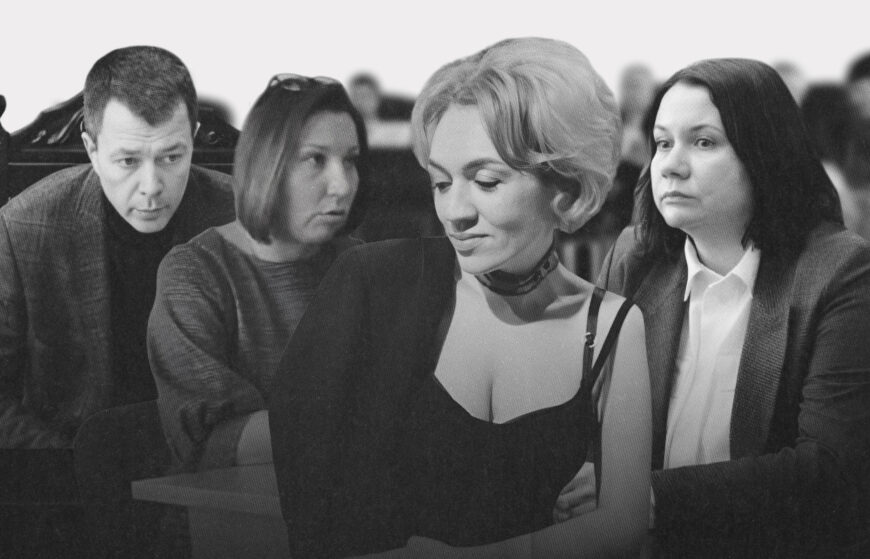
Previously, we have reported on nearly a hundred “five-year judges” who managed to “successfully” pass the interview with a panel of the previous High Qualification Commission of Judges despite receiving a negative opinion of the Public Integrity Council. According to the law, the decision of the panel must be endorsed by the full composition of the HQCJ.
Out of these hundred judges, four have already received recommendations from the new HQCJ for dismissal:
Inna Otrosh — a judge of the Kyiv Commercial Court. Apart from her career and significant assets, which she apparently acquired thanks to her influential mother from the Yanukovych regime, judge Otrosh has repeatedly visited Russia and occupied Crimea since the beginning of the Russian aggression in 2014. During the interview, Otrosh claimed that the occupation of Crimea was “the fault of Ukrainian state bodies that failed to ensure border security in a timely manner”.
Andriy Klyuchnyk — a judge of the Sviatoshynskyi District Court of Kyiv. In 2014, he placed Maidan activist Oleksandr Kostur under arrest for participating in the protests. The temporary special commission for vetting judges of general jurisdiction later determined that the judge’s decision regarding the Euromaidan activist was unlawful.
Nataliya Sharko — a judge of a district court in the Kherson region. After the temporary occupation of Kherson, judge Sharko allegedly did not leave and continued to administer “justice” in Henichesk. According to the Crimean Human Rights Group, she, now a judge of the illegal “Henichesk District Court,” issued a ruling to detain a Ukrainian citizen.
Kateryna Vasylieva — a judge of the Sviatoshynskyi District Court of Kyiv. Judge Vasylieva managed to transfer to the capital after working for only 9 days at the Chutivskyi District Court in the Poltava region, presenting herself “positively as a diligent, conscientious, and responsible worker”. Such “turbo-transfers” were a common practice in the judiciary, occurring without real competition despite the law. Additionally, Vasylieva had significant discrepancies in her declarations, from unreported real estate to drastically different salaries each month.
However, these judges and their colleagues continue to assert that their qualification assessment procedure is complete — the panel’s decision of the previous HQCJ is final. MP Roman Babiy helps the “five-year judges” defend their “rights.” For more details on how his law helps bypass the full qualification assessment procedure, follow the link.
We support the HQCJ’s decision to continue the qualification assessment of judges, as no law provided grounds to discontinue it. Now, considering this list of “achievements” of the “five-year judges”, the High Council of Justice must facilitate their dismissal. We hope that the HCJ members will not succumb to the manipulations of judges of low integrity and MPs who assist them. In this situation, it is crucial to make a decision worthy of a state body responsible for the integrity of the judiciary in Ukraine.