
Another Attempt to Establish a Controlled High Administrative Court – International Experts in the Minority
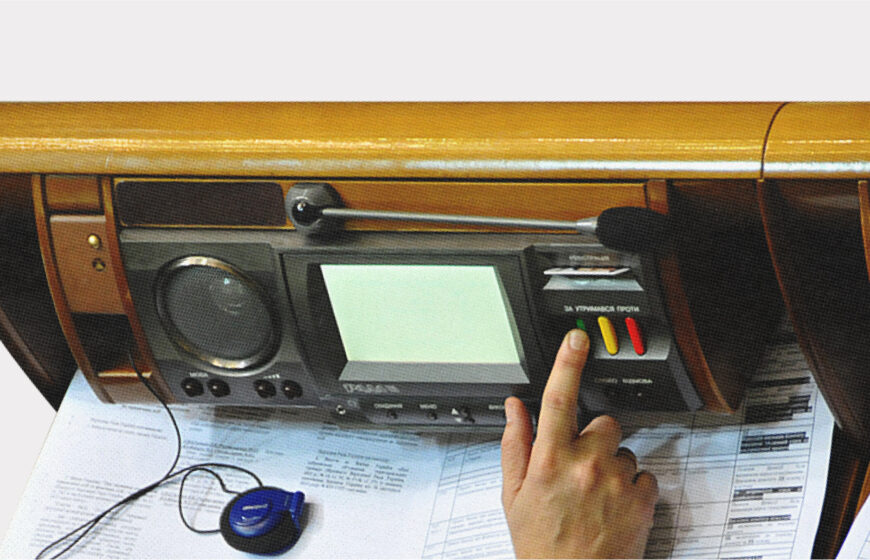
On February 12, the Verkhovna Rada’s Legal Policy Committee endorsed the creation of two new courts to replace the liquidated District Administrative Court of Kyiv (DACK). Despite concerns raised by civil society organizations, the Parliament may soon vote on the revised draft law No. 12368-1.
In January 2025, MPs adopted draft law No. 12368-1 in the first reading. The draft law aimed to establish a fully controlled court with no participation of international experts in the selection process.
What Does the “Revised” Draft Law No. 12368-1 Propose?
The draft law proposes creating two courts:
- Specialized District Administrative Court;
- Specialized Appellate Administrative Court.
These courts would handle lawsuits against the Cabinet of Ministers, central executive authorities, the National Bank, NABU, SAPO, NACP, and others. However, the draft does not mention appeals against decisions of judicial governance bodies, the High Council of Justice (HCJ) and the High Qualification Commission of Judges (HQCJ). Currently, the Supreme Court — which has no proper jurisdiction over these matters — interferes in HCJ and HQCJ operations, systematically attempting to undermine judicial reforms. DEJURE Foundation has extensively documented these issues in its reports.
A logical step would be to transfer jurisdiction over these matters to the new court, preventing further crises caused by the Supreme Court’s obstruction of reforms.
How Will Judges Be Selected?
Political authorities rejected the successful model of the Public Council of International Experts (PCIE), which played a key role in selecting judges for the High Anti-Corruption Court (HACC). Instead, draft law No. 12368-1 proposes creating a new body: the Expert Council.
This Expert Council will consist of:
- Three Ukrainian members delegated by the odious Council of Judges, known for protecting corrupt judges.
- Three international experts, without a casting (prevailing) vote.
This arrangement significantly weakens the role of independent experts in judicial selection.
For a candidate to be deemed unfit due to lack of integrity or competence, at least four votes are required, meaning at least one vote from a Council of Judges delegate is necessary. If the Expert Council fails to reach a 4-2 decision or ends in a 3-3 split, the candidate’s fate will be decided by a joint session of HQCJ (16 members) and the Expert Council (6 members). To reject a candidate, a majority of the joint body must agree, including at least two international experts.
This selection system will only be used for the first three years. After that, the process will be fully controlled by the HQCJ and the Public Integrity Council (PIC) — without international oversight.
Future Risks
Draft Law No. 12368-1 does not specify how the Expert Council will vote on its internal regulations or other procedural matters. This could paralyze its work, similar to the deadlock during the selection of the head of the Specialized Anti-Corruption Prosecutor’s Office (SAPO).
Additionally, the law lacks transparency requirements, failing to mandate the publication of practical tests for candidates, methodologies used for candidate evaluation, and disclosure of individual scores assigned by HQCJ members.
The creation of a new High Administrative Court to replace the DACK is a requirement of the International Monetary Fund and the European Union. However, the new court was expected to follow the same model as the High Anti-Corruption Court (HACC), with the involvement of the Public Council of International Experts (PCIE). Even in its “revised” form, Draft Law No. 12368-1 fails to meet the requirements of international partners. Worse, it still poses the risk of recreating the DACK under a different name.
DEJURE Foundation urges the MPs to respect the demands of European partners and protect Ukraine’s chance for a genuinely independent court. The judicial system is not yet ready for either a full or partial withdrawal of international oversight. On the contrary, foreign involvement must be maintained and expanded until Brussels confirms that Ukraine’s judiciary meets European standards.
This position was reinforced by Olha Stefanishyna, Deputy Prime Minister for European Integration, during the DEJURE Foundation’s February 12 conference: “No one plans to discontinue the work of commissions composed of international experts, where they have a decisive vote.”


