
New Courts to Replace the DACK: President Signs Draft Law No. 12368-1
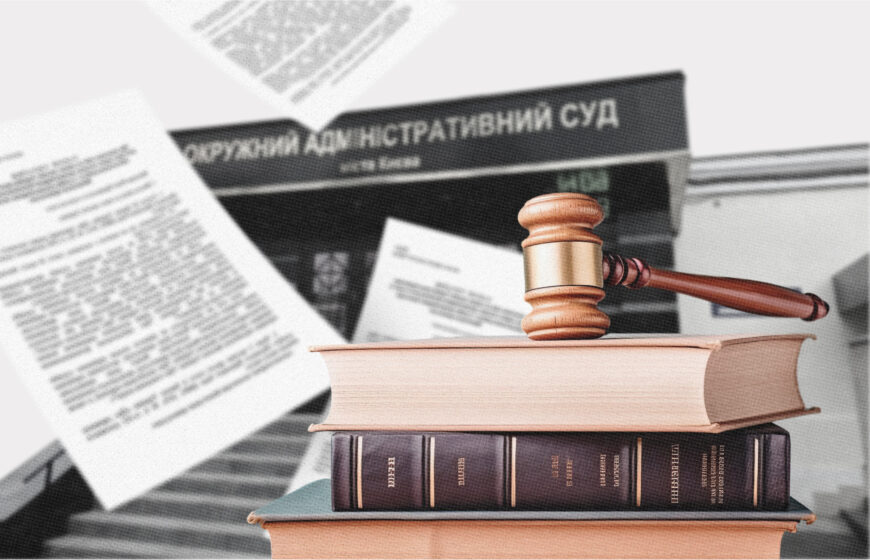
The President of Ukraine has signed Draft Law No. 12368-1, which provides for the establishment and operation of two administrative courts to replace the dissolved District Administrative Court of Kyiv (DACK). Although the draft law was significantly revised before the second reading, its final version still contains shortcomings that do not guarantee the creation of truly independent administrative courts.
The adoption of this law was a structural benchmark set by the International Monetary Fund and the European Union. DEJURE Foundation welcomes its adoption and signing. However, the law’s implementation will require public attention and close oversight, as several of its provisions raise serious concerns.
In particular, there is no clarity on how the new courts — the Specialized District Administrative Court and the Specialized Administrative Court of Appeal — will be funded. If funding is provided by the State Judicial Administration (SJA), there is a risk that financial leverage may be exercised over the newly created courts through this institution and its leadership.
Judges will be selected by an Expert Council consisting of three Ukrainian and three international members. The Ukrainian members will be nominated by the odious Council of Judges of Ukraine, which has a history of systematically appointing low-integrity individuals to such commissions. As a result, the Council may again nominate experts with serious integrity issues under the Ukrainian quota.
Furthermore, the prevailing voting power of international experts will be diluted due to the requirement to hold joint sessions of the Expert Council with the High Qualification Commission of Judges (HQCJ).
The law also does not specify how the Expert Council should vote on its rules of procedure or other operational matters. This creates a risk of adopting questionable rules and procedures that could be used to influence the Council’s work.
The newly established courts will not have jurisdiction over cases challenging the decisions of judicial governance bodies — the High Council of Justice (HCJ) and the High Qualification Commission of Judges. A dangerous trend is currently emerging in which the Supreme Court systematically attempts to roll back judicial reform achievements, such as reinstating low-integrity judges previously removed by the reformed HCJ and HQCJ. Therefore, jurisdiction over cases involving appeals of HCJ and HQCJ decisions should be removed from the unreformed Supreme Court and transferred to the new administrative courts.
DEJURE Foundation, together with its partner civil society organizations, will monitor the implementation of this law and ensure that, in practice, the selection of judges for the new courts is carried out as effectively as possible.


