Ukrainian Parliament Adopts Draft Law on Administrative Courts in Second Reading: What Are the Risks?
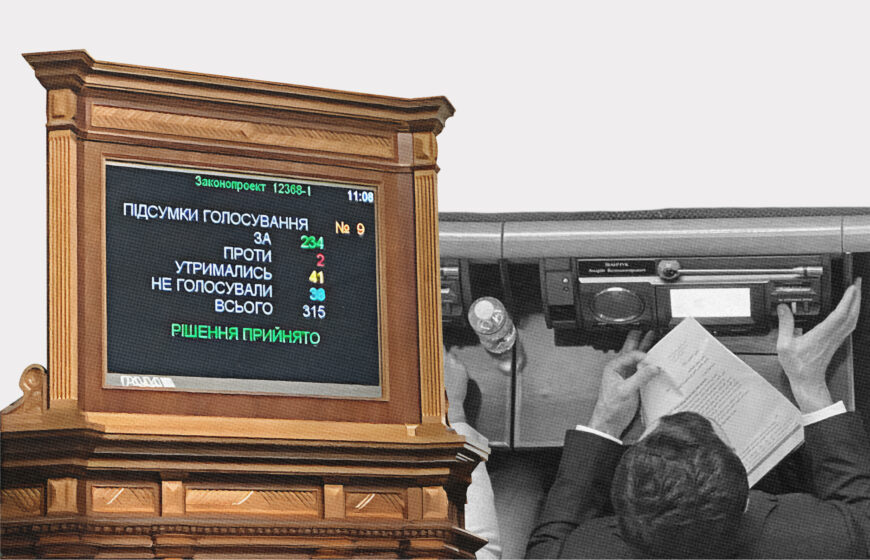
On February 26, the Verkhovna Rada of Ukraine adopted Draft Law No. 12368-1, which envisions the establishment and operation of two new administrative courts to replace the liquidated District Administrative Court of Kyiv. The draft law was supported by 234 MPs.
However, the version adopted in the second reading contains significant risks:
- The draft law proposes establishing two courts: the Specialized District Administrative Court and the Specialized Administrative Court of Appeal, instead of a single higher specialized administrative court. However, the text of the draft law does not specify the exact mechanism for financing these courts. This ambiguity could impact their funding structure since local and appellate courts receive funds through the State Judicial Administration (SJA) rather than directly from the state budget. Such a model creates risks of financial influence over the newly established courts through the scandal-ridden SJA and its leadership. A more effective way to ensure financial autonomy and independence would be the creation of a single administrative court, with the selection process overseen by an independent Public Council of International Experts. International partners, including the IMF, have also advocated for this approach, as previously noted by DEJURE Foundation.
-
Judges will be selected by an Expert Council composed of three Ukrainian and three international members. While the draft law mentions the predominant role of international experts, in practice, this authority may be diluted by the requirement for joint hearings between the Expert Council and the High Qualification Commission of Judges (HQCJ).
-
Additionally, the three Ukrainian members of the Expert Council will be appointed by the odious Council of Judges of Ukraine, which has a history of nominating unethical individuals to similar commissions. Past appointments have included figures implicated in judicial corruption scandals, such as a judge from the infamous “Vovk tapes” case and the head of the Supreme Court under Yanukovych, who supported the repressive laws of January 16, 2014.
-
The draft law does not define how the Expert Council should vote on its internal regulations and operational procedures. This omission creates a risk that questionable rules could be introduced, undermining the Council’s effectiveness and allowing external influence over its decisions.
-
The newly established courts will not have jurisdiction over cases challenging decisions made by judicial governance bodies – the High Council of Justice (HCJ) and the HQCJ. This is particularly concerning given the emerging pattern where the Supreme Court systematically attempts to reverse key achievements of judicial reform. For example, it has reinstated judges who were previously dismissed by the reformed HCJ and HQCJ due to integrity concerns.
To prevent further setbacks in judicial reform, it would be necessary to strip the unreformed Supreme Court of its authority to review decisions of the HQCJ and HCJ and transfer such cases to the new administrative courts.
Despite significant revisions, Draft Law No. 12368-1 still contains deficiencies that fail to ensure the establishment of truly independent administrative courts. A key positive aspect is the formal retention of international experts’ meaningful role in the selection process. However, whether this safeguard will work in practice remains uncertain.
DEJURE Foundation will closely monitor the implementation process to ensure that these identified risks are addressed and that the selection of judges and the operation of the new courts proceed as effectively as possible.