Oleksii Shevchuk seeks to become a judge of the International Criminal Court
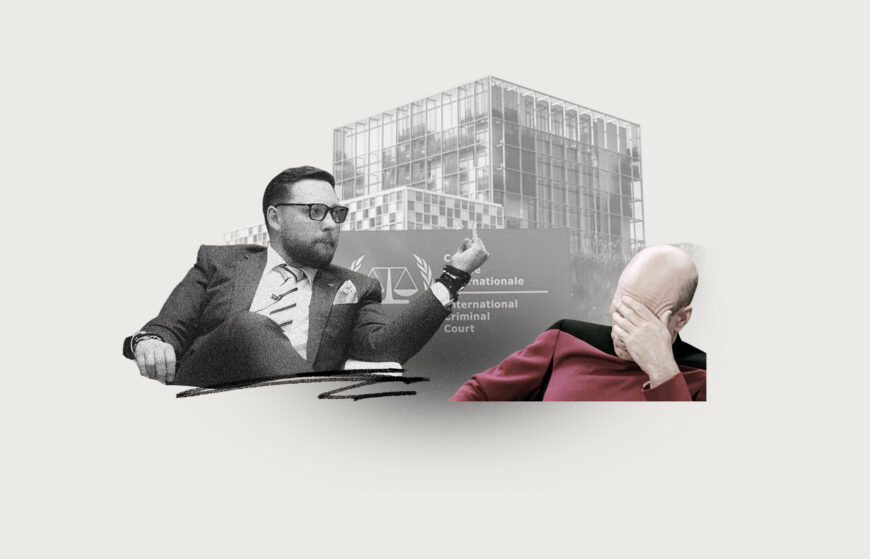
Despite scandals, disciplinary decisions, and a failed integrity assessment, Oleksii Shevchuk is seeking to become a judge of the International Criminal Court (ICC). Moreover, he aims to become the first ICC judge in history from Ukraine.
This is yet another attempt by Shevchuk to secure a high-level position. Previously, he sought to become the Director of NABU and a member of the High Council of Justice, but unsuccessfully. It also recently became known that Prosecutor General Ruslan Kravchenko delegated him to the commission selecting the leadership of SAPO, despite his failure to meet the integrity criterion. Last year, the Bar Council nominated Shevchuk as a candidate for the конкурс commission responsible for selecting members of the High Qualification Commission of Judges.
It appears that the leadership of the Bar considers Shevchuk to be one of its best and most integrity-driven representatives for such commissions. At the same time, there have long been serious concerns regarding his integrity:
- Journalists have reported on entities linked to Shevchuk that allegedly helped hundreds of men of conscription age leave the country. There is also a known case involving the disappearance of 10,000 military first aid kits from the United States, worth over UAH 33 million, during the period when Shevchuk headed a humanitarian HQ within the Lviv Regional Military Administration.
- Another scandal involved Shevchuk publicly calling himself an “officer” and threatening people with “draft notices to hot spots.” The Qualification and Disciplinary Commission of the Bar of Kyiv region found this to be a violation of legal ethics and revoked his license to practice law. However, his license was later reinstated with the assistance of the National Bar Association of Ukraine.
The European Union has already emphasised the need to restore international experts to the commission selecting members of the High Qualification Commission of Judges. The same requirement is included in the list of priority reforms in the so-called “Kachka–Kos list” on Ukraine’s path to EU membership. A draft law on restoring international experts has long been pending in Parliament, but has not yet been adopted.
The delegation of Shevchuk and other similar figures to the Commission responsible for forming the next composition of the High Qualification Commission of Judges once again demonstrates why such selection commissions cannot be left to the discretion of the current unreformed bodies. These are precisely the institutions that nominate individuals whose integrity is seriously in question.
Therefore, international participation in the HQCJ selection commission should not only be restored but maintained until key justice institutions — the judiciary, the prosecution, and the bar — have undergone at least several successful stages of reform. The same applies to other selection procedures.
Otherwise, if the international component is removed, it will be individuals like these who determine who advances through key selection processes and who ultimately shape the system from within.