The Supreme Court has stopped the scheme for bypassing the opinions of the Public Integrity Council that it had previously created itself
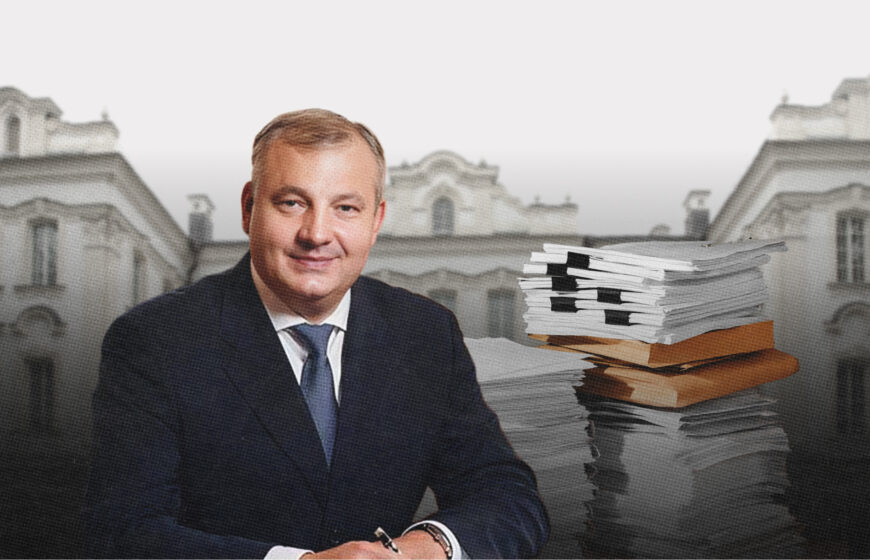
The case of judge Usatyi, through which the Supreme Court had returned more than 100 judges of low integrity to their positions, is no longer a rule to be followed. The Grand Chamber of the Supreme Court has issued a ruling departing from its previously established practice.
This shift re-establishes a basic rule for judicial evaluation: if there is a negative opinion of the Public Integrity Council, the judge must undergo an interview before the full composition of the High Qualification Commission of Judges (HQCJ). In such cases, at least 11 votes in favour are required to confirm the judge’s suitability for office. This applies to decisions of HQCJ panels adopted before 30 December 2023.
This rule had existed before and allowed the system to be cleansed of judges of low integrity. However, in June 2024 the Grand Chamber of the Supreme Court made a sharp and unjustified departure from this logic — precisely in the case of judge Vitalii Usatyi. The Court effectively allowed the negative opinion of the Public Integrity Council to be bypassed if the judge had received a positive initial interview before an HQCJ panel. This affected more than 100 questionable judges who had negative PIC opinions but positive HQCJ panel decisions adopted before 30 December 2023. Vitalii Usatyi himself — who had submitted false information in declarations and adopted decisions in situations involving conflicts of interest — managed to remain in office without undergoing a full review thanks to the Grand Chamber. Several other judges of low integrity benefited from the same approach.
DEJURE Foundation welcomes the Supreme Court’s decision to return to a universal rule and consistent approach. At the same time, we stress that exceptions have already been made, and compromised judges continue to administer justice in the name of Ukraine.
For example, the Grand Chamber of the Supreme Court recently reinstated Inna Otrosh Jr., who had accused the Ukrainian authorities of Crimea occupation and travelled to Russia after 2014, despite the HQCJ decision in 2024 finding her unfit for office. Otrosh became part of the privileged group of the so-called “Babii judges,” whom the Grand Chamber allowed to avoid an interview before the full composition of the HQCJ.
Therefore, the Grand Chamber’s decision to depart from its practice in the Usatyi case is rather a return to the normal rule than a sharp turn toward reform. It should not be forgotten that the Grand Chamber itself caused the crisis with its 2024 decision. In addition to restoring the judicial robe to the scandal-tainted Inna Otrosh, the Grand Chamber may also return former Head of the District Administrative Court of Kyiv, Pavlo Vovk — a symbol of the judicial mafia with a pro-Russian background — to the bench.
Without a real cleansing of the Supreme Court with the participation of international experts, such positive decisions will, unfortunately, remain isolated exceptions. In order for public trust in justice to be restored, the Supreme Court must stand in defence of judicial reform rather than act as its opponent.