The Supreme Court may overturn the results of eight years of judicial clean-up: a key decision in the case of Inna Otrosh
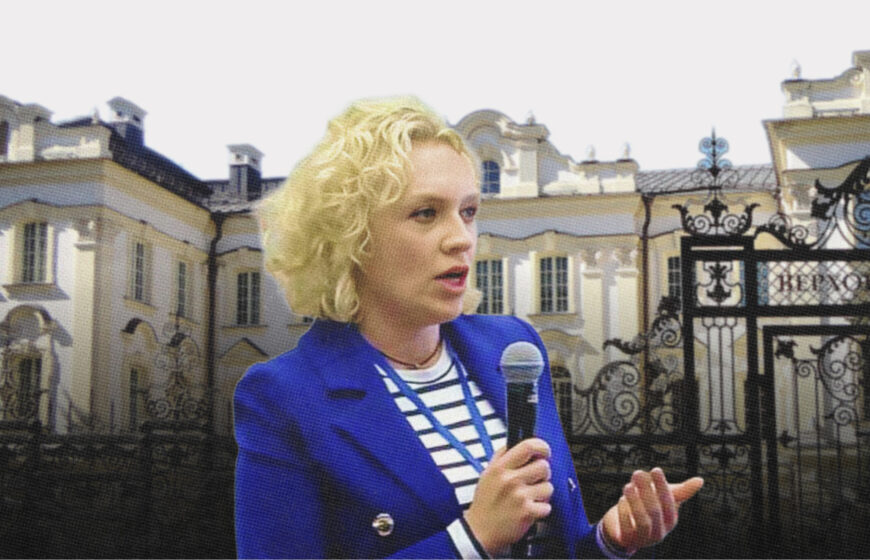
The Grand Chamber of the Supreme Court may issue a final ruling in the case of Inna Otrosh, a former judge of the Kyiv Commercial Court who was dismissed after failing her qualification assessment. If Otrosh is reinstated, it will send a dangerous signal across the entire system: that one can blatantly violate the law, disregard integrity and judicial ethics, and still remain a judge.
Why was Inna Otrosh dismissed?
- Inna Otrosh began her career under VIP conditions unavailable to other judges. She is the daughter of Inna Otrosh Sr., the former head of the Pechersk District Court of Kyiv under Yanukovych. This connection is precisely why the head of the Luhansk court provided Otrosh with a recommendation to transfer to a prestigious Kyiv court, despite the fact that she had not handled a single case at that time.
- Otrosh owns expensive property that cannot be explained by her official income. Among the assets publicly known are: a house near Kyiv of approximately 500 sq. m, three elite apartments in Kyiv, and a Lexus. During interviews with the High Qualification Commission of Judges and the High Council of Justice, Otrosh failed to explain the origins of these assets.
- After the start of Russia’s aggression in 2014, Otrosh regularly travelled to the temporarily occupied Crimea and to St Petersburg for exhibitions and to visit “relatives.” During her interview, she claimed that the occupation of Crimea was supposedly “the fault of Ukrainian state bodies that did not secure the borders at a certain time.”
What is Otrosh challenging now?
As early as 2019, Otrosh challenged a decision of the High Qualification Commission of Judges in the Supreme Court, seeking to avoid appearing before the full composition of the HQCJ. The Grand Chamber ruled that because Otrosh had a negative opinion from the Public Council of Integrity, a hearing with the full HQCJ composition was mandatory. In 2024, during such a hearing, the HQCJ recommended her dismissal, and the High Council of Justice upheld this decision.
Now Otrosh is challenging her dismissal following the 2024 qualification assessment. The former judge refers to the so-called Babii Law, which allegedly allowed a separate “caste” of judges to skip a second interview with the HQCJ despite a PCI conclusion.
The Grand Chamber recently issued a ruling in a similar (though less high-profile) case and overturned the qualification assessment results of another judge, Maryna Lozynska. There is now a risk that this precedent could become a “convenient bridge” for reinstating the scandalous Otrosh.
The Public Council of Integrity, the High Qualification Commission of Judges, and the High Council of Justice have all unequivocally stated that Otrosh’s dismissal was lawful, and that no “simplified procedures” for privileged judges exist. The Grand Chamber of the Supreme Court now has the final word. Its decision on 11 December will show whether the judicial reform of recent years is truly irreversible.
We call on the media and the public to follow this case closely:
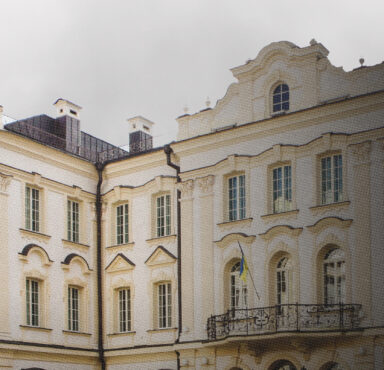
Where the hearing will take place: Kyiv, 4-A Pylypa Orlyka St. (Grand Chamber of the Supreme Court).
When the hearing will take place: 11 December, Thursday, at 14:00.