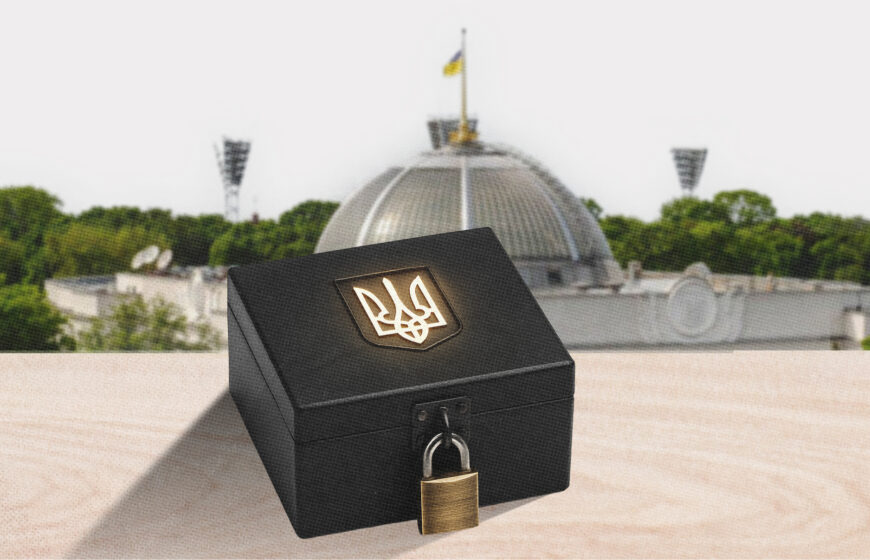
Tomorrow, the Verkhovna Rada will consider Draft Law No. 11533 on concealing the property of legal entities.
Only in the fourth year of the war have MPs suddenly become concerned about the security of defence enterprises, and they are proposing a solution that does not align with the logic of the proposed changes — to restrict access to critically important information about the real estate of any legal entity.
Draft Law No. 11533 provides for restricting access to the State Register of Property Rights to Real Estate:
-
The exact address of the property will disappear;
-
There will be no cadastral number;
-
Only the region, district, and city will remain.
What does this mean?
Corrupt officials will start transferring their assets to legal entities, and society will no longer be able to find out where the next “judge’s villa” or “prosecutor’s dacha” is hidden. It will become more difficult for journalists to expose corruption, and the public will be unable to fully verify the integrity of officials.
The Specialised Anti-Corruption Prosecutor’s Office (SAPO) is calling to “narrow the scope of the law only to information on enterprises related to the field of national security and defence industry.”
The Verkhovna Rada’s Anti-Corruption Policy Committee gave the same assessment and instead proposes to allow defence enterprises to indicate any address for communication as their location and not require them to include information in the Unified State Register about activities related to the production of weapons and ammunition. This should be sufficient to ensure the security of defence enterprises.
We call on MPs to heed expert opinions and the position of civil society and revise the draft law:
-
Conceal only up-to-date information about the location and types of activities of defence enterprises.
-
Do not restrict access to data on the real estate of legal entities.