Under sanctions but still practicing: President imposes sanctions on 90 individuals — nearly a third are attorneys
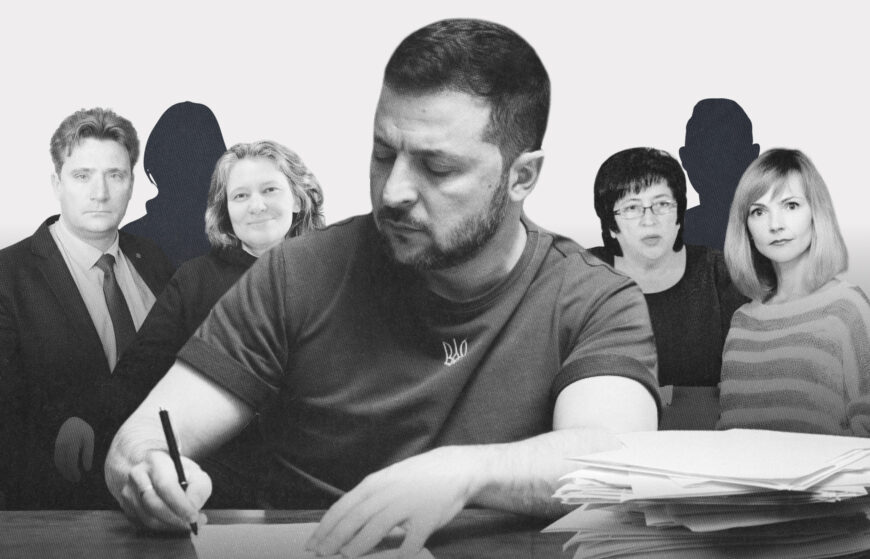
On October 8, President Volodymyr Zelensky imposed personal special economic and other restrictive measures (sanctions) against traitors to the state, enacting a decision of the National Security and Defense Council. The list includes 90 individuals, nearly one-third of whom are attorneys, with 82% still holding valid legal practice licenses.
These sanctions target those acting against national security or collaborating with the occupation authorities. Among those sanctioned, 28 individuals are listed in the Unified Register of Attorneys of Ukraine, and only five (18%) have had their licenses revoked. This includes notorious suspects such as Valentyn Rybin and Tetyana Montian. Rybin, known for representing pro-Russian activists and politicians like Viktor Medvedchuk and Anatoliy Shariy, joined the leadership of the occupation administration in Kherson in 2022. The Qualification and Disciplinary Commission of the Bar (QDCB) in Zhytomyr Oblast struggled for over 1.5 years to hold Montian accountable, citing quorum issues and air raid alarms as delays. Only on the eve of the President’s decree did the commission manage to act.
Previously, reports indicated that the Ukrainian National Bar Association (UNBA), led by Lidiya Izovitova and Valentyn Gvozdiy, has long adopted a passive stance toward attorneys collaborating with Russian occupation authorities. Instead of initiating disciplinary proceedings against traitorous attorneys, UNBA representatives have targeted attorneys serving in the military and filed numerous complaints against attorneys who publicly address issues within the legal community.
The situation with sanctioned “attorneys” exemplifies UNBA’s inaction. With 82% still possessing valid licenses, these individuals can continue practicing law, participate in bar council elections, and vote on members of the High Council of Justice. It is evident that the bar association leadership was aware of these individuals’ activities, given their long-standing collaboration with occupation authorities. For instance, Oleksandr Tsvetkov, a former head of an occupation “court” in Crimea and now of the “Kherson Oblast Court,” was even sentenced in absentia to 10 years for treason. Moreover, 24 out of the 28 sanctioned attorneys became “judges” in illegal “courts” across temporarily occupied areas of Crimea, Donetsk, Luhansk, and Zaporizhzhia regions. Notably, suspects like Serhiy Chebotaryov, Olena Sen, and Diana Rud have emerged. Rud, formerly an attorney in Melitopol, sided with the occupiers post-occupation and became a judge of the so-called “Melitopol District Court of Zaporizhzhia Oblast,” where she convicted a Ukrainian serviceman’s wife for her pro-Ukrainian stance in a sham trial.
The failure of bar institutions to revoke licenses from those openly engaging in collaboration underscores the system’s dysfunction. A survey by the Reanimation Package of Reforms Coalition (RPR) revealed that 94% of expert respondents believe that reforming the legal profession is essential and urgent. None of them considered the current disciplinary accountability mechanism, including license revocation, to be transparent or effective.