Verkhovna Rada Attempts to Undermine Public Oversight
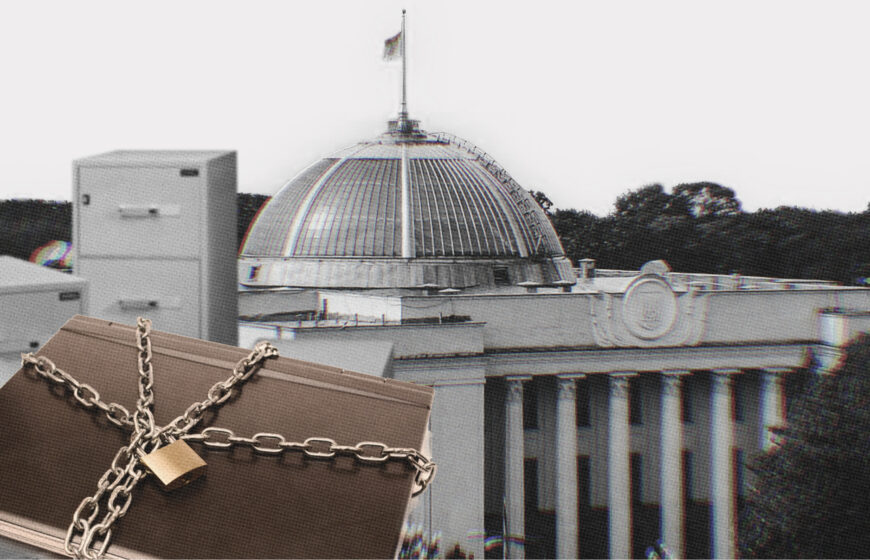
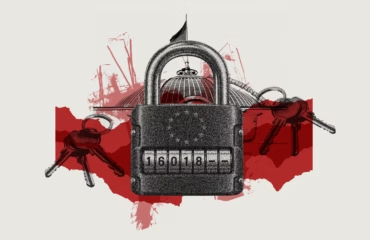
Today, the Verkhovna Rada of Ukraine is set to consider two draft laws — No. 7033-d and No. 11533 — which could restrict access to judicial registry decisions and data on property locations. This would obstruct journalists from exposing corrupt individuals, hinder the public from assessing the integrity of candidates for various positions, and prevent ordinary citizens from verifying property owners before making purchases.
Draft Law No. 7033-д:
- Limits access to information and decisions in the judicial registry. Civil society previously called for the draft law to be rejected, and it was sent back for revision by the Parliamentary Committee on Legal Policy. However, based on our information, even after revisions, the draft still contains disproportionate restrictions.
- Proposes to conceal court decisions related to conscription and mobilization (Articles 336–336-2 of the Criminal Code), as well as lawsuits filed by Territorial Recruitment Centers (TRCs) seeking to suspend individuals’ driving rights during martial law and for one year afterward. How such rulings threaten national security remains unclear.
- Grants judges the discretion to redact information from court rulings that they believe “may endanger security” — even in cases heard in open court. This significantly increases corruption risks, as it would allow judges to hide virtually any information under the pretext of “security concerns.”
Draft Law No. 11533:
-
Proposes to restrict access to data on property locations and cadastral numbers of land plots for the duration of martial law and one year beyond. If passed, users will only be able to see the country or administrative center where the property is located — nothing more. This threatens public oversight and investigative journalism aimed at exposing corruption.
DEJURE Foundation has already appealed to the National Agency on Corruption Prevention (NACP), requesting an anti-corruption review of the draft. As it turns out, no such review has been conducted.
We call on Members of Parliament to prevent the adoption of these harmful provisions.