Ukrainian CSOs call EU member states to grant Ukraine EU candidate status promptly, as recognition of joint reform achievements
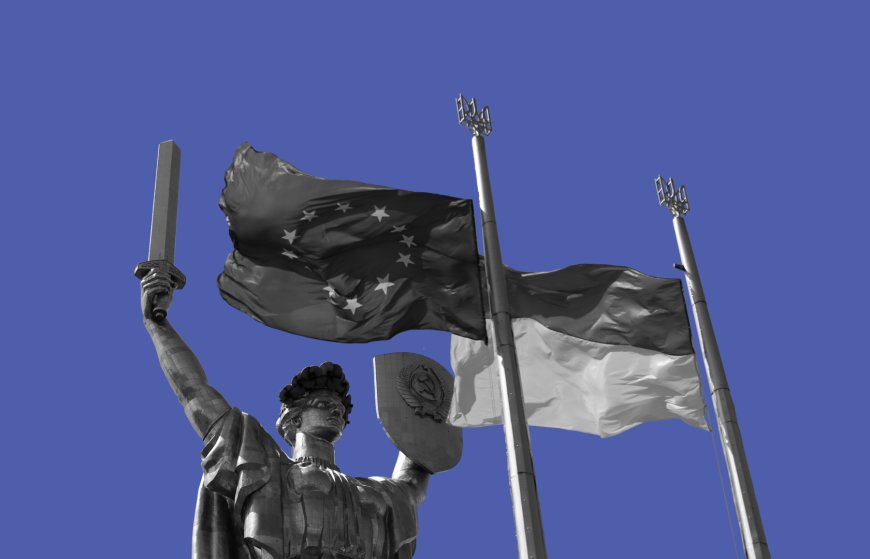
Ukraine’s ambitious reforms agenda was started in 2014 after Ukrainians took to the streets under EU flags to protest the refusal by the former pro-Russian government to sign the Association Agreement with the EU. Since then, tens of thousands of Ukrainians gave their lives to defend Ukraine’s civilizational choice, first at the Maydan, then during the Russian war in Donbas, and now during the large-scale invasion.
Despite challenges, over eight years Ukraine managed to achieve significant progress in democracy building, serving as a testing ground for innovative solutions for deep-rooted problems such as corruption. The unique Ukrainian experience can be implemented in other countries seeking solutions to problems of justice and rule of law.
In particular, a big number of transparency tools have been introduced in Ukraine. They include the electronic income and asset declaration system for public officials and the electronic reporting about assets and income of political parties. The public procurements system was transformed into an award-winning online auction system, ProZorro. Information of high interest to the public, such as state registries and beneficiaries of legal entities was open.
The entire anti-corruption infrastructure was built from scratch. This includes the National Anti-Corruption Bureau, the Specialized Anti-Corruption Prosecution, the High Anti-Corruption Court, the National Agency for Corruption Prevention, and the Asset Recovery and Management Agency. More than 800 cases of high-profile corruption are being investigated and 72 verdicts have been made by the court so far. The new agencies continue to operate and deliver results even during wartime. For example, since February 24, around $15,3 million (447,3 million UAH) were directed from bails and seized assets in the high-profile corruption cases to the needs of the Ukrainian Armed Forces.
Moreover, the long-overdue and promising judicial reform was launched and is currently ongoing. This reform foresees the renewal of top judicial decision-making authorities with engagement of independent international experts. Now we are on the final stage of this reform. These days, international experts jointly with Ukrainian judges interview the pre-selected candidates, focusing on their integrity and independence. Importantly, Moldova is now implementing judicial reform following the Ukrainian model.
Since 2014 when the EU-Ukraine Association Agreement was concluded, with overwhelming support from the EU, Ukraine has managed to achieve significant progress in the implementation of framework and sectoral reforms, namely decentralization, public administration, energy, digital, customs, environmental and public finance reforms.
Most of these reforms were drastically amplified through advocacy tools provided by the EU Visa Liberalization Plan, EU macro-financial assistance programs, the Association Agreement, IMF conditionalities, etc.
Moreover, the wider impact of Ukrainian reforms was recognized by the Russian president Vladimir Putin. On February 21, just a few days before the full-scale attack by the Russian Federation against Ukraine, Putin explicitly named and criticized Ukrainian anti-corruption and rule of law reforms in his speech. With this statement, he confirmed that the successful democratization and our European and Euroatlantic choice are one of the key reasons why Russians aim to destroy our nation.
Ukraine has already earned candidate status by implementing the reforms since 2014. Recognizing that more efforts in continuing fundamental reforms are required, we emphasize that it is exactly the EU candidate status and subsequent accession negotiations process that will be the most effective framework for further reforms promotion, giving Ukrainian civil society real advocacy leverages.
We would also like to stress that the decision on Ukraine’s candidate status should be solely based on progress assessment within EU-Ukraine’s bilateral track and cannot be conditioned on the accession process of other countries.
For the sake of future reforms in Ukraine, as well as in support of our joint efforts to bring victory, peace, stability, and prosperity to the whole region, we urge the EU to officially recognize Ukraine as a candidate country as soon as possible.
Signatories:
International Center for Ukrainian Victory
Anti-corruption Action Center
Transparency International Ukraine
DEJURE Foundation
All-Ukrainian Association “Automaidan”
Kharkiv Anticorruption Center
Center for Policy and Legal Reform
Bihus.Info
Anti-Corruption Headquarters
StateWatch
NAKO – the Independent Anti-Corruption Commission
ANTS Network
New Europe Center
Europe Without Barriers
International Renaissance Foundation
Ukrainian Center for European Policy
Institute of Social and Economic Transformation
Center for Civil Liberties
Centre for Global Studies Strategy XXI
Civil Network OPORA
ICO Environment – People – Law
Centre for Economic Strategy
Institute of legislative ideas
CHESNO Movement
Center for Social and Economic Research – CASE Ukraine
Election Council UA
DIXI Group
Association Energy Efficient Cities of Ukraine
pro.mova
Center of Social Transformations
School for Policy Analysis NaUKMA
Agency for Legislative Initiatives
Ukrainian School of Political Studies
National Association of Cinematographers of Ukraine
Human Rights Center ZMINA
Save Dnipro / SaveEcoBot
Civil Control Platform