What is needed for establishing a truly independent judiciary of hight integrity in Ukraine?
What is needed for establishing a truly independent judiciary of hight integrity in Ukraine?
The Concept describes a model of rebuilding the way commercial proceedings are organized in accordance with European models where courts reviewing a specific case are formed based on a completely different approach.
This brief aims at analyzing the experience of the DNA’s work in Romania and the subsequent pressure on it by political elites and at formulating proposals for the protection of anti-corruption institutions in Ukraine.
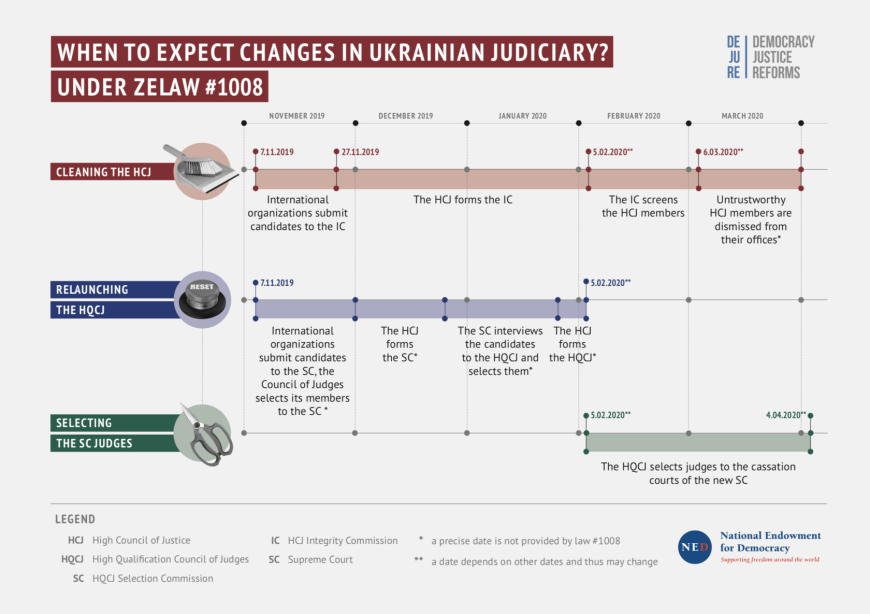
The adopted Law #1008 has introduced a number of changes in the judicial power of Ukraine.
The judicial reform which began after the Revolution of Dignity has been the most substantial in the history of independent Ukraine. Have the reforms achieved their goals? What are the successes and failures of the reforms and what are their causes? Which reforms should Ukraine continue to implement in order to raise public confidence in the judiciary and improve the efficiency of the administration of justice? The goal of this policy brief is to provide answers to these questions.
On 16th of October, the Parliament adopted a long-anticipated draft law #1008 “On amendments to certain laws of Ukraine on judicial governance bodies”. To a large extent, the draft law was a reaction to civil society’s “Agenda for Justice” initiative that called, among other things, for the relaunch of the judicial governance bodies responsible for the failure of the judicial reform of the last 5 years and popular demand for justice at large. The bill provides for a number of novelties that can increase efficiency of the judicial reform, especially in terms renewal of the judiciary. However, the bill also contains several provisions that can render the positive changes ineffective or even make judiciary more dependent on the political power. Will this stage of the reform be effective?
A short summary of the formation of the High Anti-Corruption Court in Ukraine presented at “The Formation of the High Anti-Corruption Court in Ukraine: Lessons Learned and Way Forward” side event within the framework of the Human Dimension Implementation Meeting 2019 in Warsaw (Poland).
The goal of drafting this research paper is to facilitate an informed discussion with policymakers on improving confidence in Ukrainian courts.
This Report is dedicated to the research on the outcomes of activities of judicial governance agencies’ tasked with recruitment of judges and review of complaints on disciplinary violations committed by judges in Eastern Partnership countries, which are all characterized by economies in transition and totalitarian Soviet past.
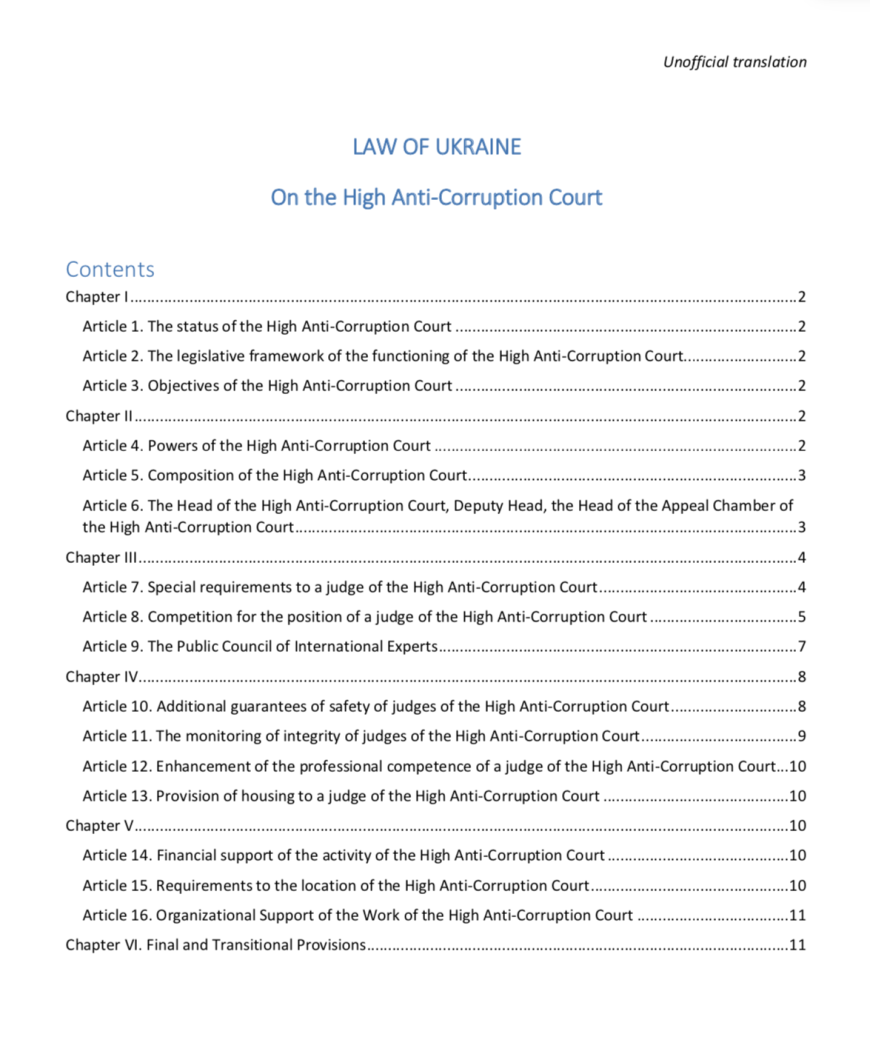
This Law determines the principles of the organization and functioning of the High Anti-Corruption Court, special requirements to the judges of this court and the guarantees of their activity. Unofficial translation.
In October 2015, the Cabinet of Ministers of Ukraine issued Resolution № 835, by which it determined a list of datasets to be published in an open data format. The first version of the Resolution 835 already contained datasets concerning activities of judicial bodies: the Cabinet obliged the State Judicial Administration to publish, in such… Continue reading Open Judicial Data: analytical report
Expanding on the Toronto Principles vision document, policy briefs provide a more detailed breakdown of reform action that needs to take place over the next five years across 12 key policy areas to achieve a more prosperous, democratic and secure future for Ukraine.