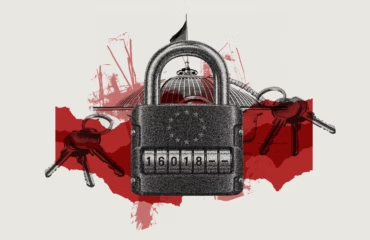
Extended, but insufficient: Parliament passes the draft law on the Public Council of International Experts

Today, October 8, the Verkhovna Rada passed a draft law concerning the Public Council of International Experts (№ 11426). The draft law addresses the extension of the council’s mandate and access to judges’ dossiers.
The Public Council of International Experts (PCIE) was established to assist in the selection of judges for the High Anti-Corruption Court (HACC). Its participation in this process has been recognized by civil society as a model of transparency and efficiency. With the adoption of draft law № 11426, MPs extended the council’s mandate by 18 months. Unfortunately, this period is insufficient for the PCIE to fully accomplish its mission.
Notably, the mandates of other bodies with international experts, such as the Ethics Council and the Selection Commission, are also set to expire soon.
What’s the other issue?
The Parliamentary Legal Committee previously rejected critical amendments to the draft law. These amendments aimed to grant the PCIE and the Public Integrity Council (PIC) full access to the dossiers containing all relevant information on judges and judicial candidates. The PIC has emphasised the importance of legislating “full access to judicial dossiers (including those of judicial candidates)”. This access is crucial for the effective involvement of both councils in the judicial selection process. However, MPs disregarded this need.
Unfortunately, the Verkhovna Rada ignored the concerns of civil society and international partners. Now, lawmakers are directly responsible for the negative consequences, particularly the slowdown in the qualification assessment process.