How the Bar Association and the Prosecutor General joined forces to pressure the NACP over the anti-corruption strategy
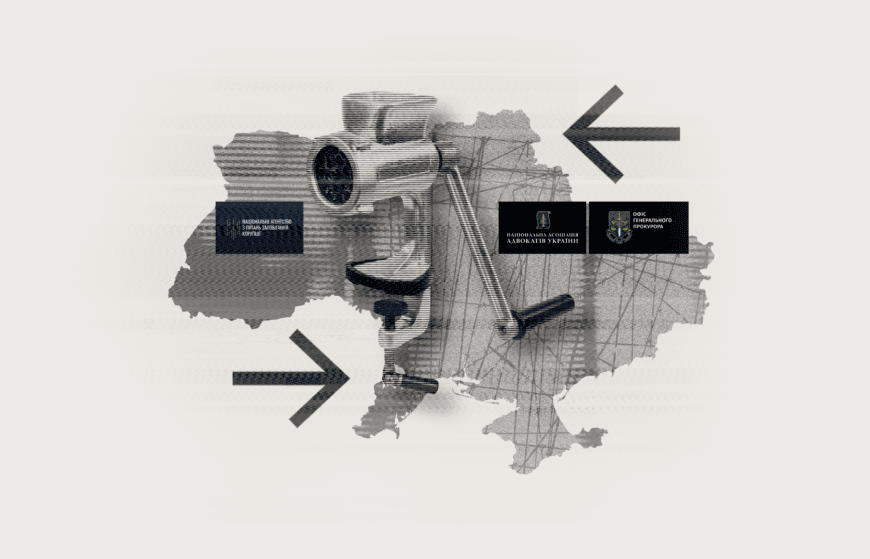
The Office of the Prosecutor General has opened an absurd criminal proceeding against officials of the National Agency on Corruption Prevention (NACP). They are allegedly accused of abusing power or official position for the purpose of obtaining unlawful benefit (Article 364 of the Criminal Code).
In reality, the reason is that the leadership of the Ukrainian National Bar Association (UNBA) disliked the section on the Bar in the draft Anti-Corruption Strategy for 2026–2030.
What is happening, and why is this proceeding absurd?
The UNBA is exerting pressure on the NACP because the government is expected to approve the draft anti-corruption strategy in the near future. The UNBA wants the section on the Bar removed from the draft because it is perhaps the first official government act acknowledging the dire state of affairs within the legal profession.
The Prosecutor General’s Office registered this criminal proceeding despite the fact that the agency acted fully within its mandate, which includes preparing such documents and determining which sectors contain corruption risks. And as we know, such risks do exist within the Bar.
What changes does the anti-corruption strategy propose?
- electronic voting in elections to self-governance bodies under the principle of “one attorney — one vote”;
- a transparent and unified qualification exam for all candidates;
- abolition of the monopoly of the Higher School of Advocacy;
- independent disciplinary bodies and a public register of their decisions;
- annual external audits of the Bar’s finances.
The last point is what Lidiia Izovitova fears the most, because tens of thousands of dollars are being spent improperly, including on commissioned reports from lobbyists.
These actions by the UNBA once again demonstrate that they are resisting reform of the Bar by any means necessary. For the leadership of the Bar, pressuring public officials who refuse to play along with them has become routine.
Former Ministry of Justice officials Andrii Vyshnevskyi and Valeriia Kolomiiets, who were stripped of their attorney licenses for allegedly “destructive management” and a “negative attitude toward the Bar.” A more recent example is the persecution of High Council of Justice member Roman Maselko simply for performing his duties.
The Bar Association is now attempting, with the assistance of Andrii Yermak, to reshape the composition of the Ministry of Justice working group on the Bar reform in favour of more loyal members. Lawsuits from the leadership of the Bar are equally common: previously, the notorious Oleksii Shevchuk filed a lawsuit against Martyna Bohuslavets and NGL.media. Now, the complaint alleging an NACP “crime” was submitted by Shevchuk’s partner at Barristers, Yurii Radziievskyi.
Prosecutor General Kravchenko is considered a protégé of the infamous Andrii Yermak, who currently heads one of the UNBA committees. At the same time, the Prosecutor General himself has no interest in the anti-corruption strategy, as it provides for an independent competition for his position. The government is currently planning to remove this provision from the document. Therefore, it is hardly surprising that the Prosecutor General’s Office initiated these proceedings against the NACP.
The DEJURE Foundation supports the NACP and its anti-corruption strategy. The objective of the UNBA and the Office of the Prosecutor General is obvious — to intimidate other state institutions and reinforce the notion that the Bar is untouchable, which is entirely unacceptable. Self-governance of the Bar is a privilege. And if self-governance bodies are incapable of ensuring transparent operations and addressing corruption risks within the sector on their own, then it is entirely logical for the state and its competent institutions to take the initiative into their own hands.