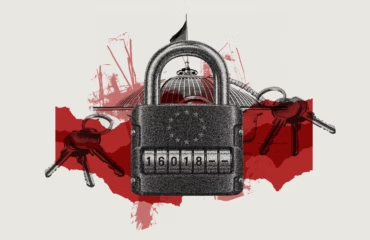
How Vovk tries to close complaints against himself, and Burlakov helps him do it in the High Council of Justice
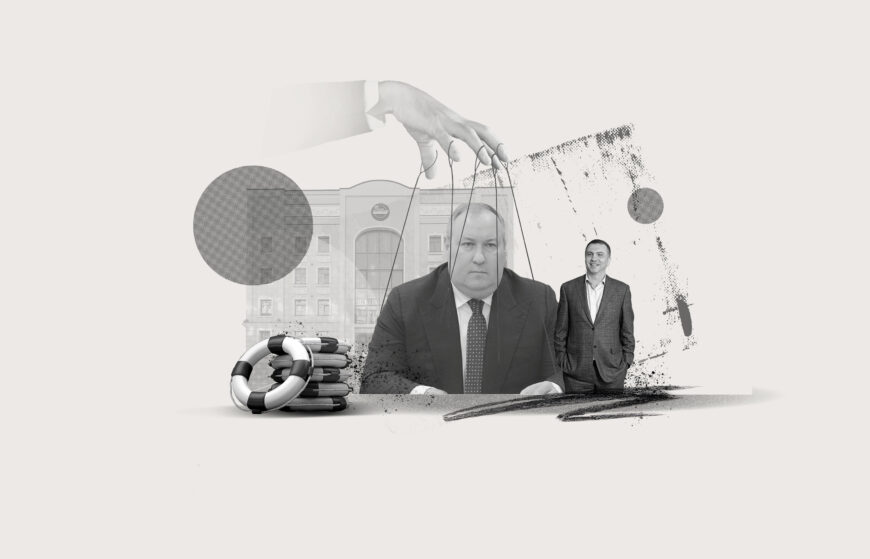
In the High Council of Justice (HCJ), an attempt was made to initiate disciplinary proceedings against an inspector following a complaint filed by Pavlo Vovk, who is trying to return to his position through the Supreme Court.
HCJ member Serhii Burlakov proposed opening disciplinary proceedings against disciplinary inspector Iryna Davydovych. The basis was a complaint from former head of the District Administrative Court of Kyiv Pavlo Vovk, who claims that the inspector is delaying the review of a complaint against him. Davydovych has a heavy workload — more than 1,200 complaints have been assigned to her. In addition, after Vovk’s dismissal from the position of judge, complaints against him lose priority. As a result, none of the HCJ members supported Burlakov’s initiative.
This situation reveals two problems at once: gaps in the legislation that allow judges who were dismissed and later reinstated to avoid accountability, and the selective approach promoted by Burlakov within the HCJ.
What needs to be changed in the law?
- A year ago, the High Council of Justice dismissed Pavlo Vovk from the position of judge. He is currently appealing this decision before the Grand Chamber of the Supreme Court. At the same time, it is beneficial for Vovk if disciplinary complaints against him are now closed: current legislation provides that after a judge is dismissed, complaints are returned to the complainant without consideration, because formally there is no subject of disciplinary liability. Vovk seeks to be reinstated by the Supreme Court while ensuring that no complaints against him remain pending before the HCJ. In that case, he would escape responsibility.
- Legislative changes are needed here. If the Supreme Court reinstates a judge, the review of disciplinary complaints and submissions of the HQCJ on dismissal that were left without consideration due to the prior dismissal should be automatically resumed. More details on this issue are available in DEJURE’s analysis.
What is wrong with Burlakov’s other decisions?
- Previously, according to our experts’ assessment, Serhii Burlakov delayed the consideration of the case concerning judge Vsevolod Kniaziev, which involved allegations of receiving a bribe of nearly $3 million. As a result, the disciplinary case was never examined, because Kniaziev was dismissed on other grounds — due to renting an apartment at an understated price.
- Burlakov also failed for more than a year and a half to process a priority complaint against judge Volodymyr Kuksov, who, among other things, expected Russia to capture Ukraine, justified the actions of the occupiers, and made contemptuous statements about Ukrainian defenders. Kuksov’s dismissal took place only after the complaint was processed by inspector Oleksandra Liubarets within a few months.
- Separately, Burlakov has publicly opposed the admissibility of using materials from criminal proceedings in disciplinary procedures — including in his own published article. At the same time, it was precisely on the basis of criminal case materials (the “Vovk’s tapes”) that the HCJ adopted the decision to dismiss Pavlo Vovk.
This episode is another test for the HCJ’s ability to protect the judicial system from the influence of Vovk and his associates. The Council passed this test. The attempt to “punish” the inspector following Vovk’s complaint looks like playing into the hands of a person who seeks to return to the system and is interested in making his disciplinary history disappear from the agenda. At the same time, the current legal provision indeed allows judges to wait out their dismissal and, if reinstated, return without any pending complaints. Therefore, the law should be amended to ensure that the review of complaints and submissions of the High Qualification Commission of Judges on dismissal is automatically resumed if they were left without consideration due to the absence of a subject of disciplinary liability.