Parliament to consider the Vlasenko–Buzhansky Temporary Investigation Commission (TIC) report proposing control over courts and anti-corruption bodies
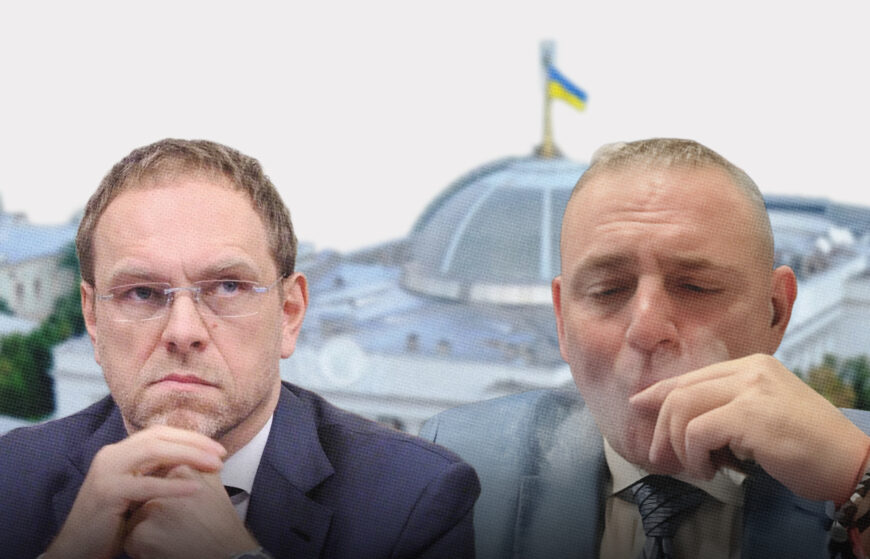
The Vlasenko–Buzhansky Temporary Investigation Commission “on investigating possible facts of corruption in law-enforcement and judicial bodies” has published its report on the results of its work, which has been included on the Verkhovna Rada’s agenda for a vote on 17 December. Experts of the DEJURE Foundation have analysed the report. In particular, the document contains the following key messages:
-
The TIC praised the work of the State Bureau of Investigation (SBI) and emphasised the inadmissibility of pressure on this body;
-
The TIC was dissatisfied that it could not apply a compulsory appearance order to HQCJ member Chumak due to his status as a judge. The Commission therefore proposed amendments to the law which, in effect, pose threats to judicial independence: adding provisions to the law on TICs allowing for the compulsory appearance of judges as well;
-
Attempts to push legislative changes that would enable political authorities to control the selection of members of the Public Integrity Council (PIC);
-
Efforts to limit the discretion of the High Council of Justice (HCJ) and the High Qualification Commission of Judges in assessing judges’ integrity;
-
Proposals to “cut off” the High Anti-Corruption Court (HACC) from jurisdictional disputes in SBI cases, so that such cases cannot be transferred to the National Anti-Corruption Bureau (NABU);
-
The TIC also advances a narrative against NABU, speaking of “provocations of bribery” and the “artificial creation of crimes” by anti-corruption bodies—promoting the thesis that they “do not catch criminals, but frame them.”
It was through this parliamentary commission that plans were initially made to dismantle the independence of NABU and the Specialised Anti-Corruption Prosecutor’s Office (SAPO). The Vlasenko–Buzhansky Commission later attempted to interfere in the work of the High Anti-Corruption Court, but received a response stating that its request “shows signs of unauthorised excessive collection of information about the activities of the court and judges.”
The next targets became the High Qualification Commission of Judges of Ukraine and the Public Integrity Council.
On 9 December, the High Council of Justice stated that the TIC was interfering in its activities and emphasised that such actions pose a threat to the independence and authority of the judiciary. The HCJ submitted a corresponding notice to the Office of the Prosecutor General and the Verkhovna Rada.
If MPs approve by a majority vote the report prepared by the Vlasenko–Buzhansky TIC, they will extend its mandate for at least another six months and, moreover, endorse theses that are criticised even in the conclusion of the Verkhovna Rada’s Rules Committee.
It should be recalled that the European Commission has also drawn attention to the work of destructive TICs. In its 2025 report on Ukraine’s progress toward EU membership, the Commission explicitly states:
It is important that parliamentary oversight does not erode public trust in anticorruption institutions through unwarranted public statements nor overstep the limitations stemming from the separation of powers.
The European Commission clearly signals that turning parliamentary oversight into a political instrument of pressure runs counter to the principles on which the EU is built.
The DEJURE Foundation calls on Members of Parliament not to encourage but to halt the uncontrolled activities of the TIC, which jeopardise reform achievements and, consequently, Ukraine’s accession to the European Union.