New composition of the Council of Judges: Monich is gone, but there are still no grounds for optimism
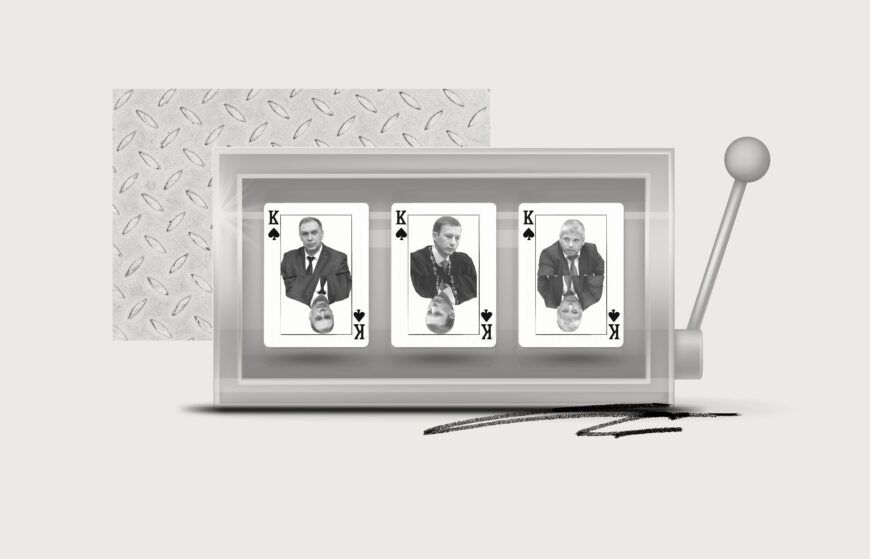
The Congress of Judges of Ukraine has elected new members of the Council of Judges of Ukraine (CJU) — a body tasked with safeguarding judicial independence, delegating integrity-compliant representatives to various selection commissions, and implementing decisions of the Congress of Judges. In practice, however, the CJU has for years operated differently: shielding judges of low integrity, putting pressure on whistleblowing judges, and opposing efforts to cleanse the judiciary.
The composition of the newly elected members suggests that no positive changes should be expected. Bohdan Monich is no longer among them, but other judges linked to Pavlo Vovk are present, as well as a former member of the High Council of Justice (HCJ). For a long time, the public has raised concerns about their integrity, professional ethics, and role in blocking reforms.
Vitalii Salikhov
- One of the new CJU members is Vitalii Salikhov, a former member of the High Council of Justice. During his tenure at the HCJ, he acted in tandem with Serhii Burlakov. Together, they effectively blocked the work of the Second Disciplinary Chamber when decisions on disciplining judges had to be adopted. In particular, Salikhov spent more than nine months preparing an opinion in the case of the judges of the Kyiv Court of Appeal, who were exposed for receiving a $35,000 bribe hidden in coffee packages and internet provider brochures.
- Salikhov and Burlakov also repeatedly voted in sync, forming a majority to block disciplinary decisions. They sabotaged both the opening of cases against judges and the imposition of disciplinary sanctions.
- Salikhov’s position in cases involving serious allegations against judges was also telling. In particular, together with Burlakov, he blocked the proposal to dismiss judge Serhii Burkhan, who was suspected of receiving a $2,500 bribe. Burkhan was ultimately dismissed only after Salikhov’s term had expired.
- Likewise, Salikhov, Burlakov, and Inna Plakhtii were the only HCJ members who voted against the dismissal of judge Inna Otrosh.
Oleh Holovenko
- Among the members of the Council of Judges is also Oleh Holovenko, whose record has long raised serious concerns. In 2019, the High Qualification Commission of Judges (HQCJ) recommended his dismissal after he failed the professional competence exam, scoring less than 50%. However, the HCJ at the time did not dismiss him, waiting until he challenged the HQCJ decision before the Supreme Court.
- Moreover, Holovenko was likely involved in artificially obstructing the work of the HQCJ under Pavlo Vovk’s influence. He filed a lawsuit against HQCJ member Tetiana Veselska, and his representative in the case was Oleksandr Krotiuk — a figure featured in the “Vovk tapes” and a defendant in the related criminal proceedings.
- Holovenko has also issued rulings with signs of political motivation. In particular, he annulled voting results at polling stations in a way that helped a candidate from the Party of Regions win a parliamentary election.
Kostiantyn Kobylianskyi
- Kostiantyn Kobylianskyi is a judge of the liquidated District Administrative Court of Kyiv. According to the Public Integrity Council, the judge and his family own assets that do not correspond to their declared income. This is especially notable given that his father was an influential official during the Yanukovych era and a member of the High Council of Justice.
- The judge also has ties to Yevhenii Ablov, former deputy head of the District Administrative Court of Kyiv and a defendant in the “Vovk tapes” case. In particular, Kobylianskyi attended Ablov’s birthday party, and HQCJ members who were present at the same event later assessed him during qualification evaluation and issued a positive decision.
Inna Otrosh Jr. was also close to being elected to the Council of Judges, but her candidacy did not receive sufficient support. Her controversial reputation likely became too serious an obstacle even for this body.
Nevertheless, the renewed composition of the Council indicates that the system continues to preserve the influence of individuals associated with mutual cover-ups, blocking disciplinary procedures, and resistance to cleansing the judiciary. The figures mentioned above are only the most notorious among those elected to the new CJU. Based on their records alone, there are strong grounds to believe that this body will continue to delegate low-integrity candidates to selection commissions of key judicial institutions and will obstruct the work of the renewed judicial governance bodies — the High Council of Justice and the High Qualification Commission of Judges.
In the near future, the full composition of the Council of Judges must elect a new chair. This election will show whether the new CJU will change its course even partially. Previously, the position was held by Bohdan Monich, considered an ally of Pavlo Vovk.
DEJURE has consistently advocated for the abolition of the Council of Judges of Ukraine and the transfer of most of its powers to the High Council of Justice. The draft law required for this has long been registered in Parliament, but the Verkhovna Rada has yet to consider it. Until then, the CJU will remain a mechanism through which low-integrity judicial elites and their representatives within the Council retain influence over judicial self-governance.