The Grand Chamber of the Supreme Court will decide the fate of two dismissed judges — and show where judicial reform is headed
On December 4, the Supreme Court may deliver a ruling that will determine not only the fate of two judges who have already been dismissed, but also demonstrate whether the judicial system is finally capable of cleansing itself of judges of low integrity — or whether it will once again protect its own.
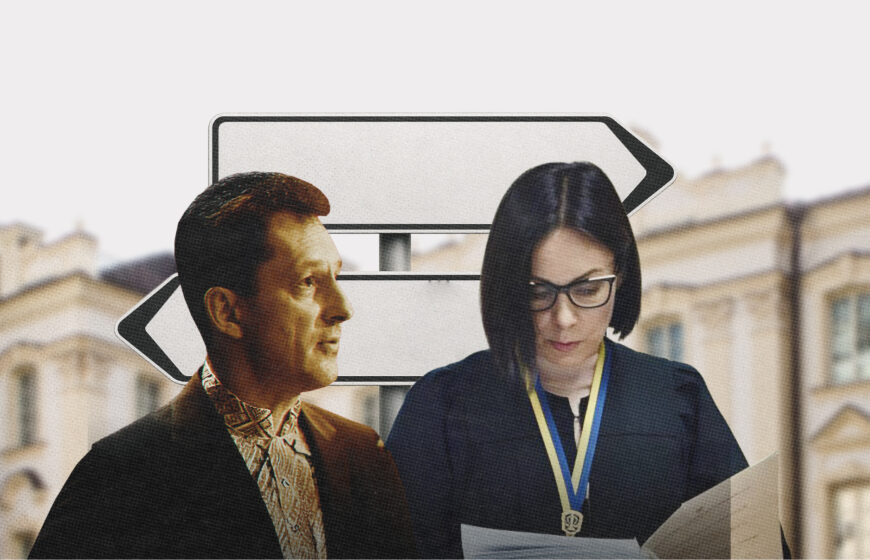
The Grand Chamber will consider the cases of judges Alyona Mazur and Eduard Bondarev, dismissed by the High Council of Justice on the basis of materials obtained through covert investigative actions (CIA). These decisions will show whether the Supreme Court is shaping case law that could later allow the dismissal of Pavlo Vovk — former head of the District Administrative Court of Kyiv (DACK) and one of the most notorious symbols of judicial impunity — to be overturned.
The Case of Alyona Mazur
Alyona Mazur is a judge of the now-liquidated District Administrative Court of Kyiv. The First Disciplinary Chamber of the High Council of Justice established that in 2019 Mazur, together with other DACK judges, sabotaged the qualification assessment by “collectively falling ill” on the instruction of court president Pavlo Vovk. In addition, she failed to inform the High Council of Justice and the Prosecutor General about Vovk’s interference in her judicial activity, despite being legally obliged to do so.
Despite the scale of the problem, the renewed High Council of Justice has been able to finally dismiss only three DACK judges, while consideration of the remaining cases has been dragging on for years. Now there is a risk that the Grand Chamber of the Supreme Court will open the way to the reinstatement of two of the three judges already dismissed, including Mazur.
The Case of Eduard Bondarev
Eduard Bondarev is a judge of the Commercial Court of the Dnipropetrovsk Region. According to law enforcement authorities, the judge, together with accomplices, abducted his business partner, demanding that he relinquish ownership of a business and agricultural machinery, which Bondarev had previously registered under straw persons. The value of the dispute is approximately $17,000.
The High Council of Justice dismissed Bondarev, including on the basis of a complaint filed by the DEJURE Foundation. The Supreme Court must now decide whether to uphold this decision.
DEJURE continues to monitor both cases. The Grand Chamber’s decisions on December 4 will show whether the Supreme Court will become an ally of society in cleansing the system — or continue to shield those who have for years destroyed public trust in justice.