Vacancy of honor: will the High Council of Justice appoint a candidate from the independent commission?
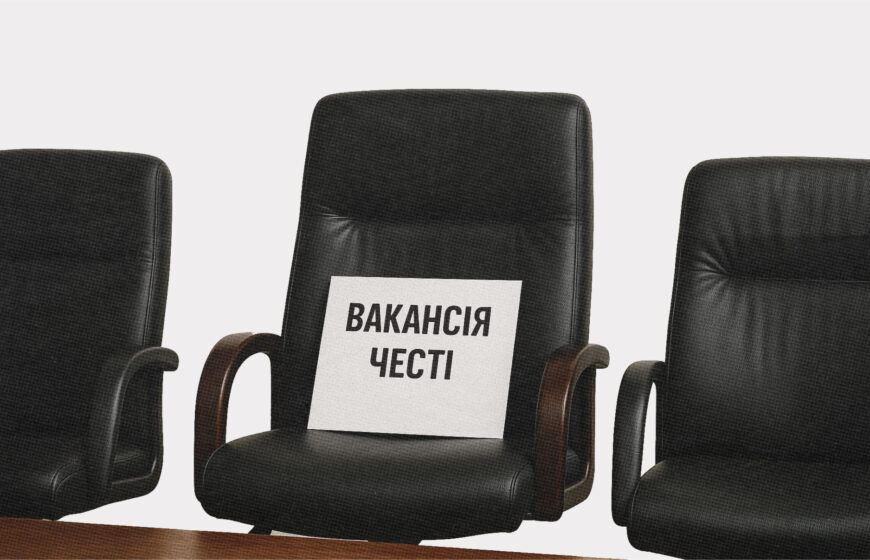
Will the High Council of Justice (HCJ) prove that it is truly reformed — or will it once again play into the hands of the old elites? On July 15, the HCJ will hold interviews with candidates for the High Qualification Commission of Judges (HQCJ) selected by the Selection Commission with the participation of international experts.
The Commission recommended two candidates:
-
Ihor Kushnir — retired judge of the Cassation Commercial Court within the Supreme Court;
-
Oksana Vozniuk — judge of the Bila Tserkva City District Court of Kyiv Region.
Following the previous competition, the HCJ had already rejected both proposed candidates. This time, it is crucial that the situation does not repeat — and that the vacant seat in the HQCJ is filled by a candidate selected through a transparent competition involving independent experts.
Failure to appoint an HQCJ member reduces the Commission’s capacity, which is currently actively selecting judges for appellate courts. It also shifts control over the appointment of HQCJ members back to unreformed bodies such as the Council of Judges or the Ukrainian National Bar Association (UNBA). In particular, UNBA President Lidiia Izovitova has made no secret of her desire to influence this process. After a round table she organised, it became clear: for Izovitova and her circle, the idea of open competitions is unacceptable, which is why they seek to dismantle it. Therefore, expecting more high-integrity and independent HQCJ candidates from a Commission without international experts is simply unrealistic.
By appointing one of the recommended candidates, the HCJ can demonstrate that it is indeed a reformed body that does not play by the old elites’ rules.
Meanwhile, Members of Parliament still have a chance to prevent the rollback of judicial reform. They can support Draft Law No. 13382, which reinstates independent international experts in the Selection Commission. Thanks to high-quality selection with international participation, the current HQCJ has already recommended dismissing 52 judges of low integrity and is now conducting a transparent selection for appellate courts.
Judicial reform stands at a critical juncture. It is now up to the HCJ and Parliament to decide whether the progress achieved will be preserved.