Vovk finally dismissed from the position of judge
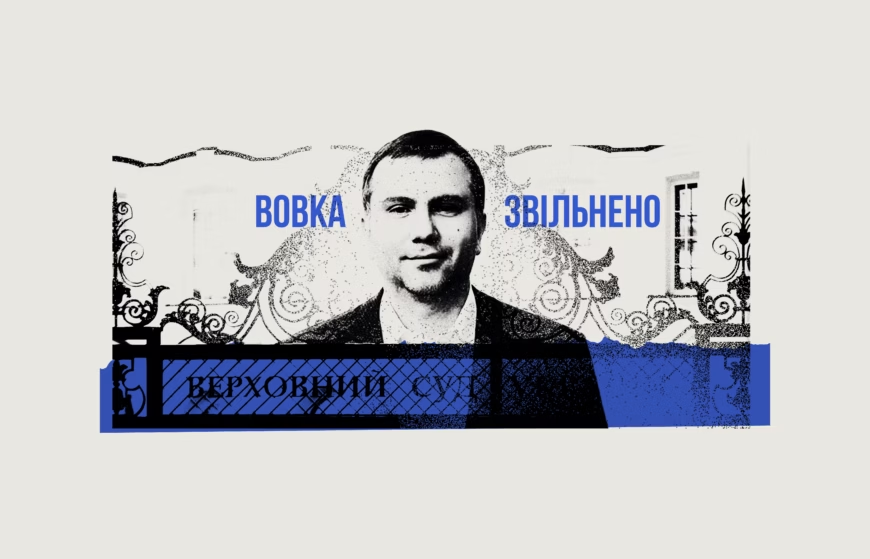
On June 18, the Grand Chamber of the Supreme Court upheld the decision of the High Council of Justice to dismiss Pavlo Vovk, the former head of the liquidated District Administrative Court of Kyiv. The Court denied Vovk’s request for reinstatement to the position of judge.
This ruling puts an end to Vovk’s attempt to return to the judge’s seat. For DEJURE, this is a matter of principle, since such people have no place in the judiciary of a democratic state that aspires to become a member of the EU.
Details of the hearing:
Vovk tried to reclaim his robe, arguing that recordings from his office — the so-called “Vovk’s tapes” — could not be used in the disciplinary case because they originated from a criminal proceeding. He also claimed that the deadlines for holding him accountable had allegedly been violated and that there had been no quorum at the HCJ meeting.
Vovk’s representative also asked to postpone consideration of the case until the review of the decision concerning his deputy, Yevheniy Ablov, who is currently challenging the provisions of the High Council of Justice’s regulations.
The Supreme Court denied this motion and rejected the other arguments raised by the appellant. As we have already reported, this ruling matters beyond Vovk’s case alone. Had the Court accepted the former judge’s arguments, it could have triggered a domino effect and jeopardised the dismissal of dozens of judges whose disciplinary decisions were likewise based on materials from criminal proceedings or were issued under the same procedure.
Context:
Pavlo Vovk headed the DACK for more than twelve years — a court that became a symbol of political influence, corruption scandals, and impunity. DACK was linked to decisions banning protests during the Revolution of Dignity, attempts to overturn important reforms, and numerous accounts of possible influence over the judicial system. In 2022, after DACK effectively attempted to restore Yanukovych’s legitimacy and after the United States imposed sanctions on Pavlo Vovk, the court was liquidated.
Vovk’s dismissal became possible after the High Council of Justice was relaunched with the participation of international experts. Just a few years ago, such a scenario would have been difficult to imagine. The previous composition of the HCJ repeatedly showed leniency toward DACK judges, and after the “Vovk tapes” were made public, it did not even suspend the central figure from administering justice.
Now the Grand Chamber of the Supreme Court has confirmed that the HCJ’s decision was lawful, and that ties to the old judicial elite do not guarantee immunity from accountability.
This is a clear signal that judicial reform is moving forward, and that the old order will not return.
For Ukraine, which aspires to EU membership, this is a fundamental matter. There must be no place in the judiciary for people who, for years, undermined trust in the justice system and used the courts as a tool of influence.