Yanukovych-era Supreme Court President shows bias against Constitutional Court candidate
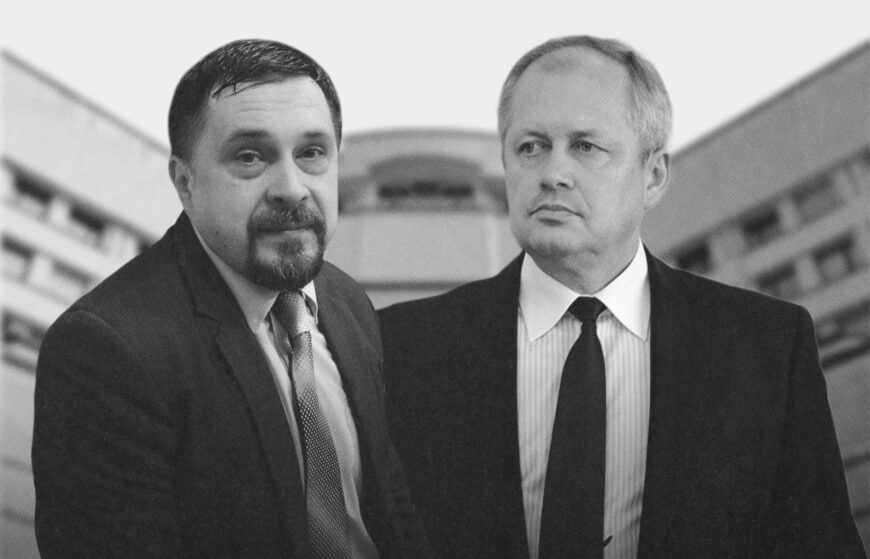
Yesterday, on July 15, a series of interviews began for candidates for the Constitutional Court under the President’s quota. One of the candidates, lawyer Kostyantyn Krasovsky, faced numerous questions about his property and declarations from public representatives and members of the Advisory Group of Experts (AGE). During the interview, he failed to dispel these concerns.
In 2017, Krasovsky served as the Head of the Main Department of Legal Policy in the Presidential Administration. During this period, he played a role in implementing judicial reform, including developing legislation on judicial qualification assessment. There were suspicions within the AGE that he got his position through his acquaintance with Oleksiy Filatov, the Deputy Head of the Presidential Administration. However, Krasovsky denied any conflict of interest.
During the interview, AGE member Yaroslav Romaniuk expressed his negative attitude towards the judicial reform in which Krasovsky was involved. Romaniuk questioned:
- Are Ukrainian judges so corrupt that judicial reform is necessary?
- Is there a need for such a stringent qualification assessment?
- Was it necessary to create the Public Integrity Council (PIC)? Romaniuk argued that PIC members were unknown individuals.
Krasovsky avoided giving clear answers and instead asserted that the Supreme Court had been formed with decent candidates, dismissing public concerns and PIC opinions as unfounded.
It is worth noting that Yaroslav Romaniuk was the President of the Supreme Court of Ukraine during Yanukovych’s presidency and had a negative opinion from the Public Integrity Council. This was due to his support of the repressive “January 16 laws” during the Revolution of Dignity. In 2017, he lost his position as the Supreme Court President and was forced to retire after failing to pass the competition for the new Supreme Court.
Romaniuk was delegated to the Advisory Group of Experts by the Council of Judges, known for shielding corrupt judges and sabotaging laws aimed at cleansing the judiciary, alongside Volodymyr Kuzmenko, implicated in the “Vovk tapes” scandal.
Such interviews with Constitutional Court candidates are unacceptable as they discredit the selection process and the impartiality of the AGE, showing its Ukrainian side as highly biased. Judicial reform, including the qualification assessment, is one of the primary requirements of international partners on Ukraine’s path to EU membership. The frequent corruption scandals involving Ukrainian judges highlight the necessity of judicial reform and cleansing of the judiciary. We hope all members of the Advisory Group of Experts share this vision.