Paving the way for Pavlo Vovk’s return? The Grand Chamber may reinstate judges dismissed for bribery allegations
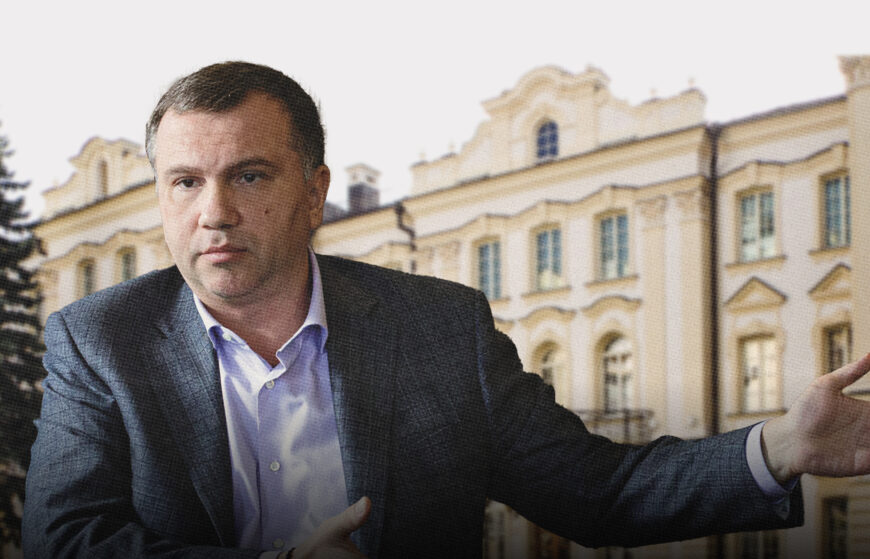
The Grand Chamber of the Supreme Court may issue a ruling that opens the door for Pavlo Vovk and dozens of other judges dismissed for corruption. On Thursday, October 23, the Grand Chamber will consider the appeals of three judges, Yurii Novak, Serhii Vysotskyi, and Serhii Burkhan, all challenging the decisions of the High Council of Justice (HCJ) to dismiss them for disciplinary offences.
The key evidence in all three dismissal cases consists of materials from criminal proceedings, including the results of covert investigative actions (CIAs):
-
Serhii Burkhan was dismissed over bribery suspicions. CIA transcripts show him discussing “issues” with an intermediary outside of court proceedings — negotiating an illicit payment.
-
Serhii Vysotskyi was caught receiving a $4,000 bribe.
-
Yurii Novak, according to the investigation, accepted a $10,000 bribe so that his colleague, judge Blazhko, would issue the “right” ruling in a case.
These materials formed the basis for their dismissal. And now, precisely because of them, the entire system of disciplinary accountability for judges suspected of crimes may collapse.
Why does this concern Pavlo Vovk?
The dispute centres on whether the HCJ can use materials from criminal proceedings, including CIA recordings (audio, video surveillance, etc.), in disciplinary cases. The Supreme Court’s Grand Chamber has repeatedly ruled in the past that it can. However, there is now an attempt to overturn this practice — in the interest of Pavlo Vovk, the former head of the District Administrative Court of Kyiv, who was dismissed based on the so-called “NABU tapes.”
If, in the cases of Novak, Vysotskyi, or Burkhan, the Grand Chamber decides that the HCJ had no right to use pre-trial investigation materials, this will set a new precedent that could later be applied to reinstate Vovk. The fact that this shift comes just before a ruling in Vovk’s own case will likely be presented as a “mere coincidence”.
Who in the Grand Chamber is playing by Vovk’s rules?
Recent appointments to the Grand Chamber raise serious questions. According to our sources, newly appointed judge Ihor Dashutin is personally acquainted with Pavlo Vovk and even attended his birthday celebrations. Despite this, Dashutin has not recused himself from the case that could determine Vovk’s fate.
One judge of the Grand Chamber, Olha Stupak, also has conflicts of interest:
-
Olha Stupak previously challenged the use of criminal case materials in her own disciplinary proceedings, where they were key evidence. She is therefore directly interested in the outcome of this case. Notably, the HCJ dismissed Vovk following a complaint by Roman Maselko. In other cases involving Maselko, Stupak recused herself — but not in this one, suggesting that her vote is crucial for a ruling in Vovk’s favour.
Despite these circumstances, two continue to participate in cases where the admissibility of criminal investigation materials is a central issue.
If the Grand Chamber overturns the HCJ’s decision in even one of the three judges’ cases, the consequences will be catastrophic. It would pave the way for the reinstatement of Vovk and other judges implicated in the “DACK tapes”, bringing back into the judiciary dozens of individuals suspected of crimes — effectively derailing judicial cleansing efforts.
This would once again demonstrate that although the District Administrative Court of Kyiv has been formally liquidated, the judicial mafia continues to control key institutions, including the Supreme Court itself.
And this is no longer a matter of mere legal technicalities — it’s a question of whether Ukraine can truly move toward a fair judiciary and genuine European integration.