We call on the MPs to exclude the provisions that jeopardise the Public Integrity Council from draft law No. 10140-д - DCB56

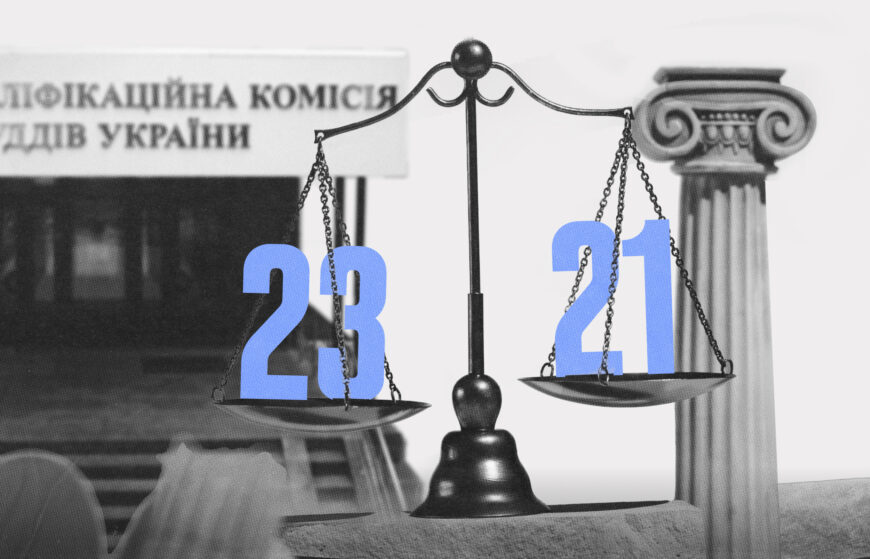
23 against 21. Does the High Qualification Commission of Judges agree with the negative opinions of the Public Integrity Council?

After almost four months, the results of the qualification assessment of judges are as follows: In 23 cases, the High Qualification Commission of Judges (HQCJ) has overturned the negative opinions of the Public Integrity Council (PIC), allowing these judges to retain their positions.  In 21 cases, the Commission has recommended the judges for dismissal. Thus,… Continue reading 23 against 21. Does the High Qualification Commission of Judges agree with the negative opinions of the Public Integrity Council?
Pavlo Vovk will NOT become a judge of the Supreme Court. The High Qualification Commission of Judges (HQCJ) recognised him as unsuitable for the position

Pavlo Vovk did not appear for his qualification assessment for the second time, and the HQCJ decided that he was unfit for the position of judge of the Administrative Court of Cassation within the Supreme Court due to his non-appearance. Previously, Pavlo Vovk wanted to become a judge of the Supreme Court, so this qualification… Continue reading Pavlo Vovk will NOT become a judge of the Supreme Court. The High Qualification Commission of Judges (HQCJ) recognised him as unsuitable for the position

The working group checked the information about Roman Ihnatov’s possible Russian citizenship: what did the HQCJ decide?

On February 8th, the High Qualification Commission of Judges (HQCJ) convened to review the findings of a special working group tasked with investigating the potential Russian citizenship of Roman Ihnatov, the head of the HQCJ.

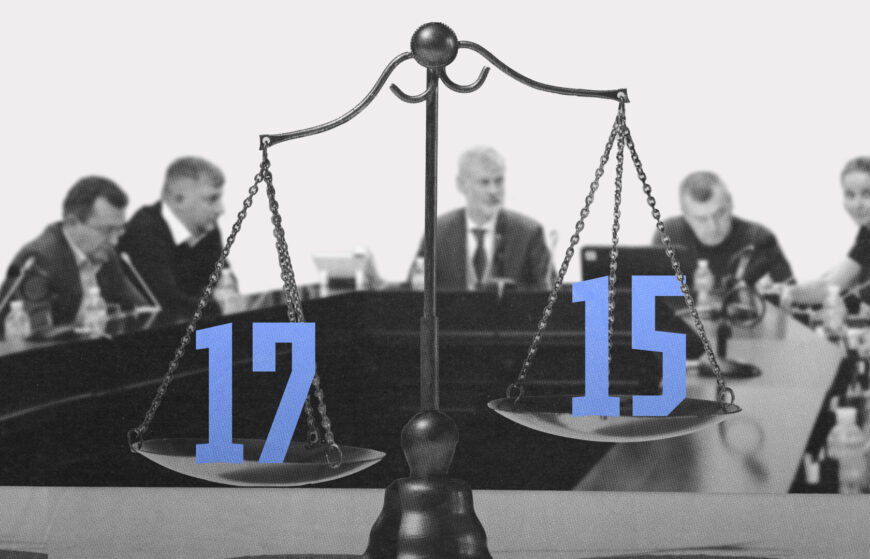
17 against 15. Does the High Qualification Commission of Judges agree with the negative opinions of the Public Integrity Council?

After nearly three months of qualification assessment, here are the outcomes: The High Qualification Commission of Judges (HQCJ) has completed its assessment of 36 judges who received negative opinion from the Public Integrity Council (PIC). Of these, the HQCJ has overturned the negative opinions in 17 instances, allowing these judges to maintain their positions. However,… Continue reading 17 against 15. Does the High Qualification Commission of Judges agree with the negative opinions of the Public Integrity Council?
The HQCJ retains the “Maidan judge” Radutska in office

Yesterday, on January 29, judge Larysa Radutska of the Shevchenkivskyi District Court in Kyiv underwent an interview with the High Qualification Commission of Judges (HQCJ). Despite her track record, the commission deemed Radutska fit to continue administering justice. What is known about “Maidan judge” Radutska? In 2014, Radutska stripped Lyubov Sushalska of her driving licence… Continue reading The HQCJ retains the “Maidan judge” Radutska in office

Five questions for the new HQCJ regarding the qualification assessment of judges

This article was originally published at LB.ua. On June 1, 2023, an almost 4-year epic story ended with the appointment of the new composition of the High Qualification Commission of Judges (HQCJ) — a kind of HR agency of the judicial system. You can read about it in more detail in this material. One of… Continue reading Five questions for the new HQCJ regarding the qualification assessment of judges

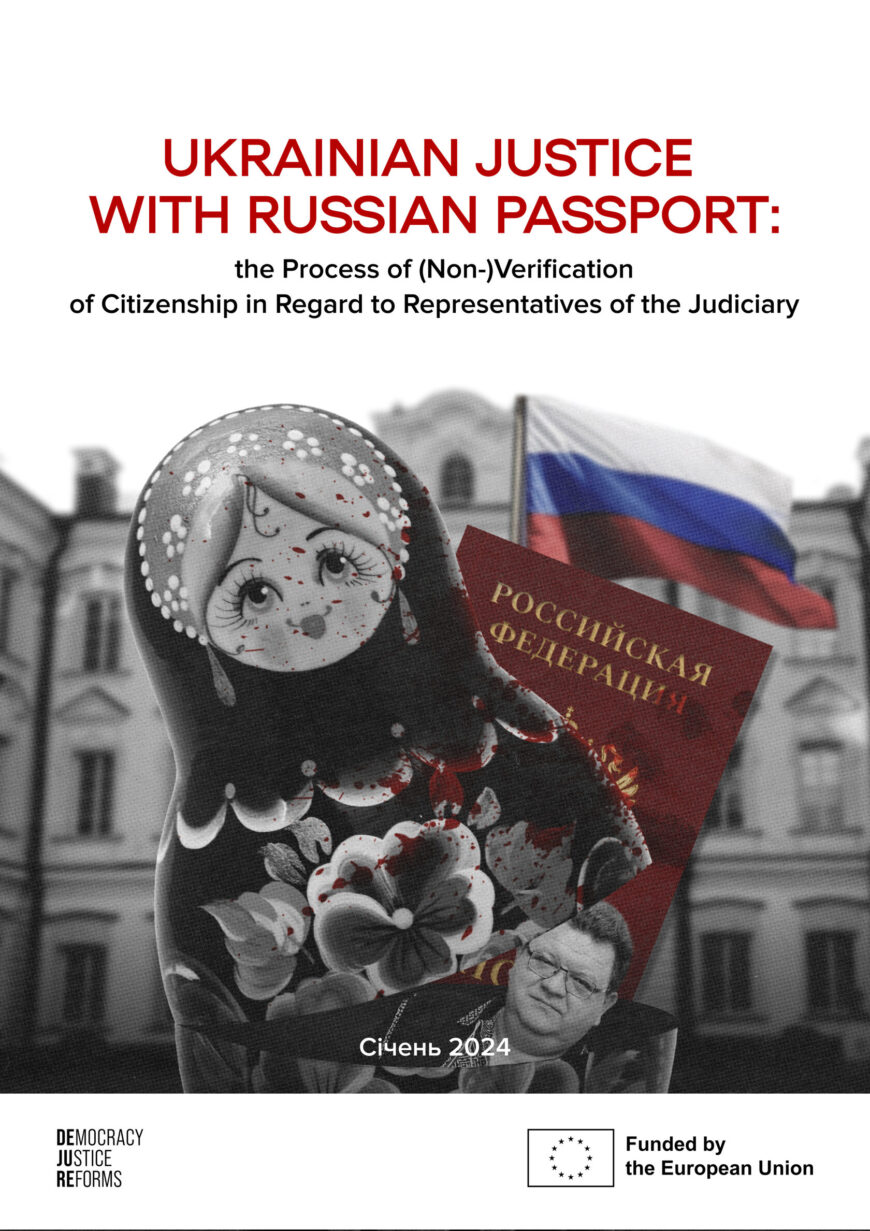
Ukrainian Justice with Russian Passport: the Process of (Non-)Verification of Citizenship in Regard to Representatives of the Judiciary

In Ukraine, anyone with citizenship of another state cannot be a judge or hold a position in the civil service. Recent investigations by journalists into the links between judges and the Russian Federation have shocked society. It turns out that the citizens of the aggressor country have been adopting decisions “in the name of Ukraine”… Continue reading Ukrainian Justice with Russian Passport: the Process of (Non-)Verification of Citizenship in Regard to Representatives of the Judiciary

The HQCJ recommends to dismiss the “Maidan judge” Izovitova-Vakim

Today, January 18, the High Qualification Commission of Judges in plenary recognised the “Maidan judge” Izovitova-Vakim as not suitable for her position. During the Euromaidan, the judge adopted two decisions banning peaceful assemblies in Kharkiv. Firstly, she prohibited peaceful rallies from November 26 to 29, 2013. Subsequently, she extended this ban indefinitely the following day,… Continue reading The HQCJ recommends to dismiss the “Maidan judge” Izovitova-Vakim

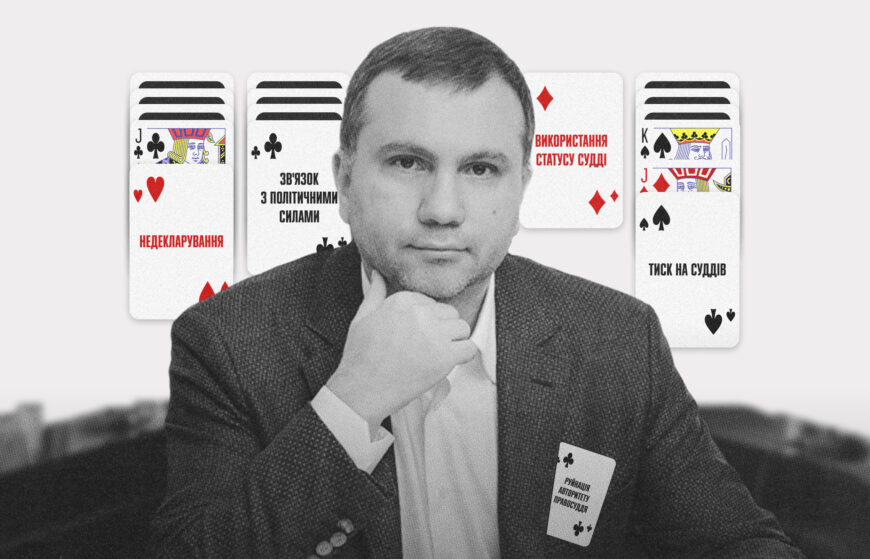
Tomorrow, Pavlo Vovk will undergo the assessment at the HQJC, with a record-breaking negative opinion of 180 pages

Despite the fact that the law on the liquidation of the DACK was adopted more than a year ago, Pavlo Vovk and other judges of this court still “have not left the game” and have retained their positions. And therefore, they continue to “emerge” on the agendas. Back in 2017, Pavlo Vovk applied for a… Continue reading Tomorrow, Pavlo Vovk will undergo the assessment at the HQJC, with a record-breaking negative opinion of 180 pages

Regarding the information concerning the citizenship status of Roman Ihnatov, the head of the High Qualification Commission of Judges (HQCJ)

Today, on December 21, “Dzerkalo Tyzhnia” published a letter from the Foreign Intelligence Service of Ukraine addressed to the HQCJ. The letter discusses the outcome of the citizenship verification for Roman Ihnatov and highlights the alignment of his information with data obtained from Russian databases.

Judge Vilchynskyi is trying to complete the qualification assessment through the court and “show an example” to other 2,000 judges

Tomorrow, the Supreme Court will consider Judge Vilchynskyi’s appeal to the High Qualification Commission of Judges. This development poses a potential threat to the overall integrity of the qualification assessment process. 

We call on the MPs to exclude the provisions that jeopardise the Public Integrity Council from draft law No. 10140-д

On November 21, draft law No. 10140-д passed its first reading in the Verkhovna Rada, posing a significant threat to the fundamental mechanism of public involvement in the assessment and selection of judges—the Public Integrity Council (PIC).